
What Is Burnout? The Complete Science Explained
You are still meeting deadlines, answering messages, and caring for others. Outside, you look capable. Inside, ordinary tasks require more effort, rest is not restorative, and work feels distant or irritating.
Is this burnout, ordinary stress, depression, poor sleep, or a health problem?
That is the question this guide answers.
Burnout is often described as being tired or overwhelmed. Those experiences matter, but tiredness alone is not enough. Context, symptom pattern, demands, and declining recovery all matter.
This guide explains burnout’s definition, biology, risks, symptoms, and first recovery steps for anyone whose responsibilities have exceeded sustainable capacity.
| If you recognize yourself in this description, pause before adding another self-improvement project. Note the three areas in which your capacity has changed most: energy, emotional range, thinking, relationships, sleep, or work function. |
What Is Burnout?
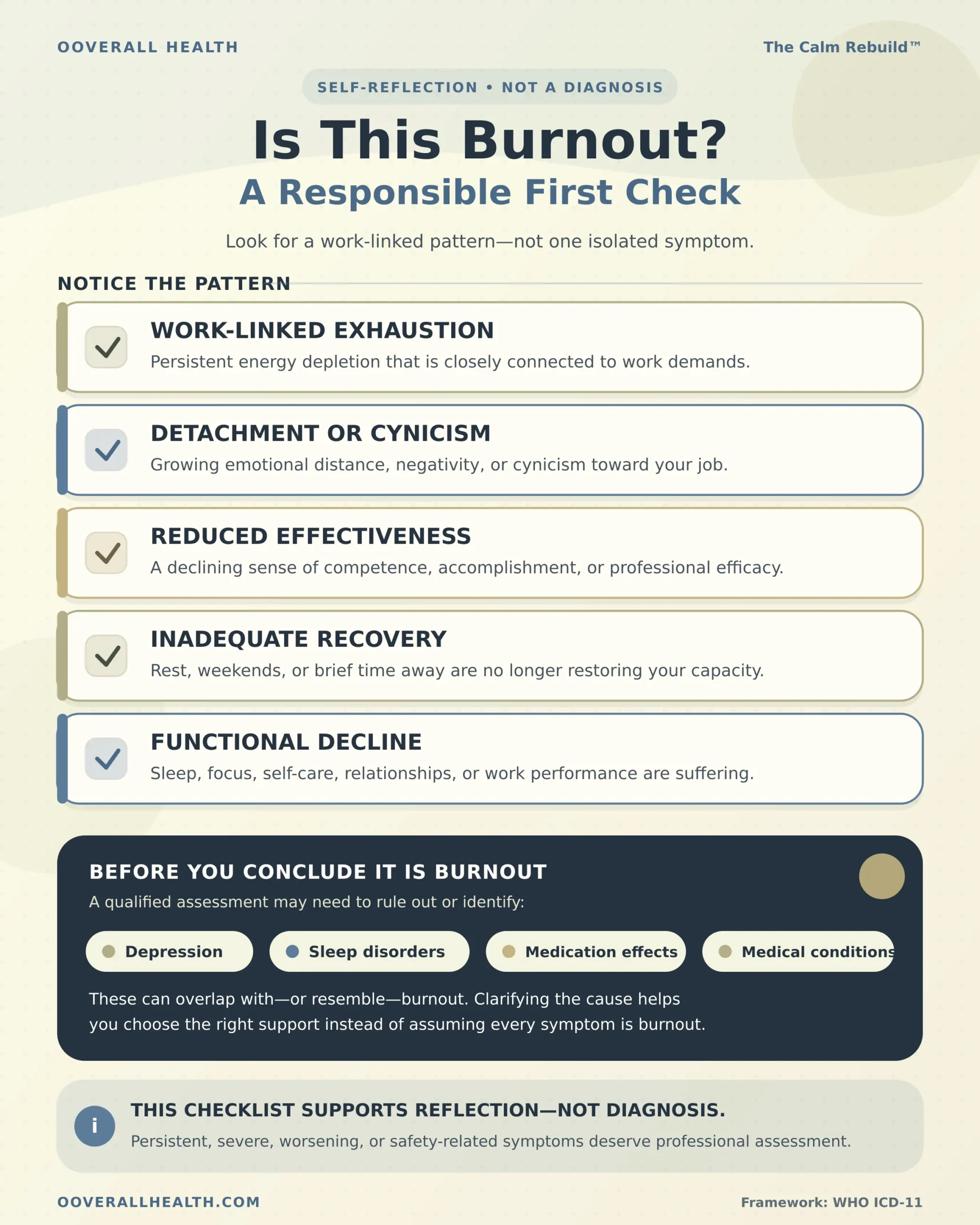
Burnout is a work-related pattern resulting from chronic workplace stress that has not been successfully managed. The World Health Organization describes three dimensions: exhaustion, increased mental distance or cynicism toward work, and reduced professional effectiveness. It is an occupational phenomenon, not a medical diagnosis.[1]
In everyday language, people also use “burnout” for severe exhaustion linked to parenting, caregiving, study, or other sustained roles. Those experiences can be profound, but the WHO classification specifically applies burnout to work.
This distinction is not a dismissal. It prevents a vague label from replacing a proper assessment. A caregiver may be experiencing caregiver strain, depression, sleep deprivation, trauma symptoms, or several conditions at once. A professional may have burnout and an iron deficiency. A parent may be depleted by invisible labour while also living with anxiety. The label should organize investigation, not end it.
For the broader recovery framework, see The Complete Guide to Burnout Recovery: How to Rebuild Energy, Calm Your Nervous System, and Restore Your Life.
The Three Core Dimensions of Burnout
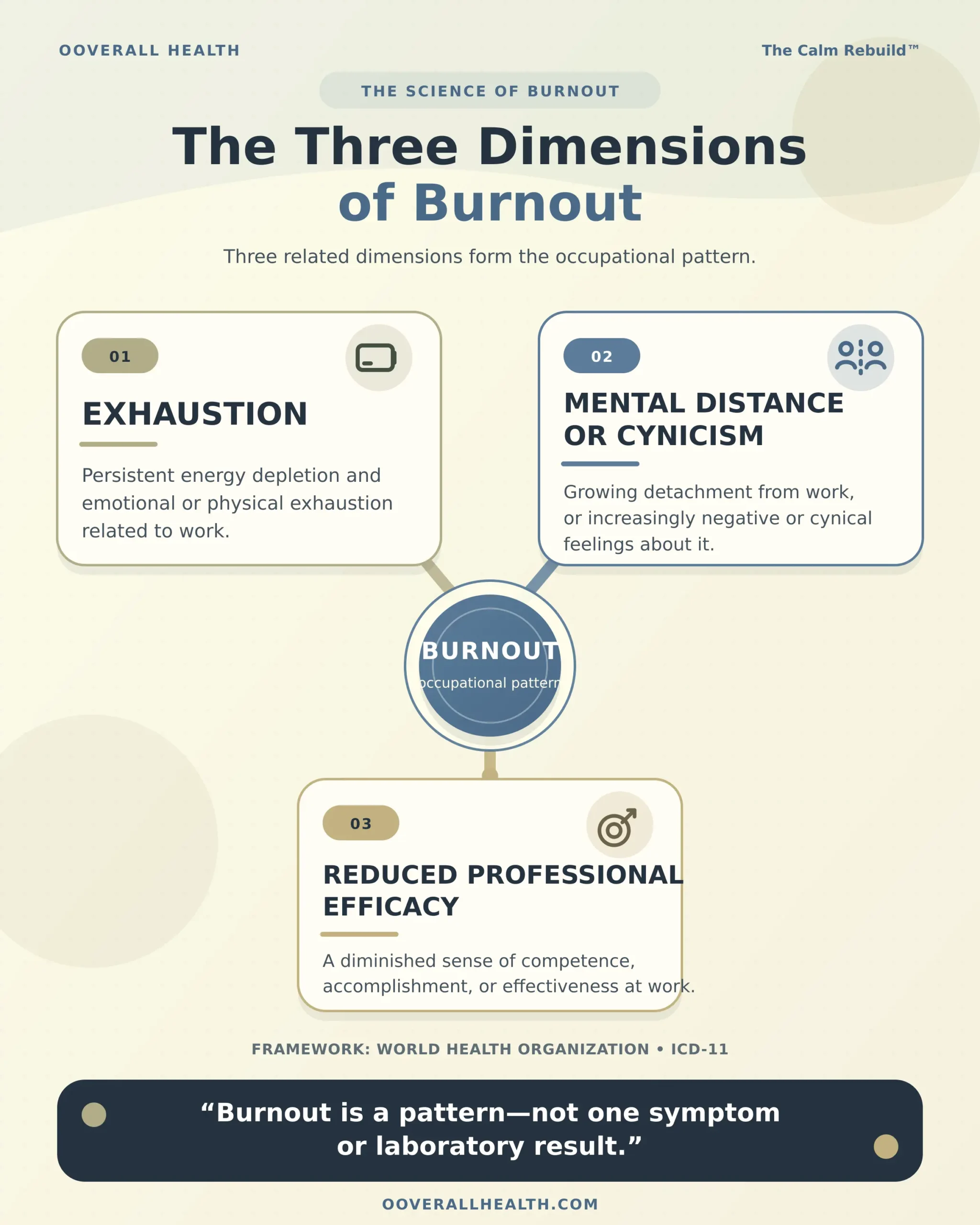
1. Exhaustion
This is more than feeling sleepy after a demanding day. It may feel like emotional depletion, reduced physical energy, difficulty initiating tasks, or needing much longer to recover from routine demands. Rest may help temporarily without restoring full capacity because the conditions producing the strain remain.
2. Mental distance, negativity, or cynicism
The mind may create distance from work as a form of protection. You may become impatient with clients, detached from colleagues, resentful of requests, or numb toward outcomes that once mattered. In healthcare and service roles, this can appear as depersonalization—relating to people as tasks rather than human beings.
Emotional distance may emerge when sustained caring has repeatedly exceeded available resources.
3. Reduced professional efficacy
You may feel less competent, productive, or confident, even when your objective performance remains acceptable. Concentration, working memory, planning, creativity, and decision-making can become harder. Some people work longer to hide the decline, which further reduces recovery time.
These dimensions develop unevenly, which is why one symptom or laboratory test cannot identify burnout.
Burnout Is Not the Same as Stress
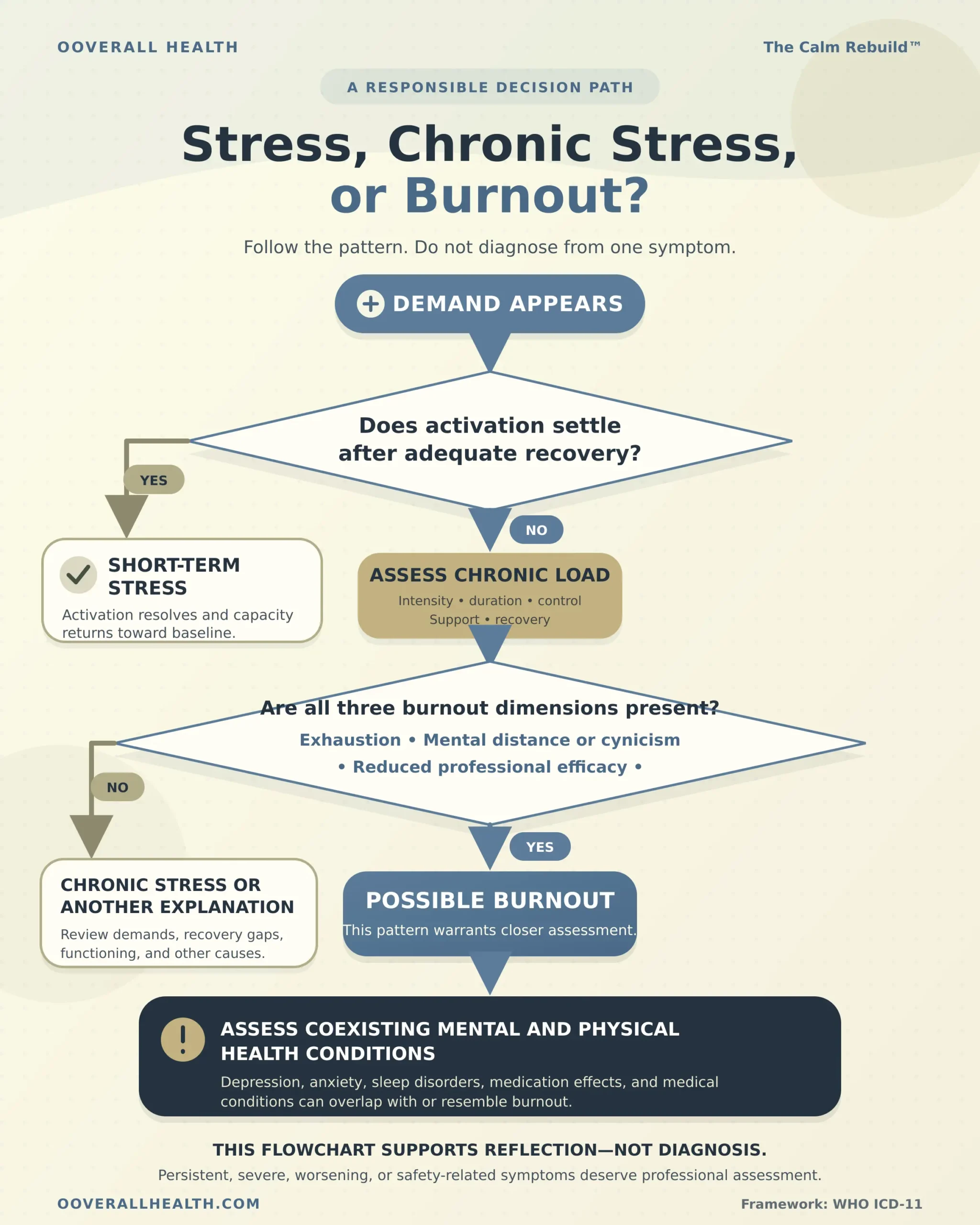
Stress is the body and mind’s response to demands or threats. Short-term stress can improve attention and mobilize energy. It becomes harmful when demands are intense, prolonged, unpredictable, or poorly matched by control, support, meaning, and recovery.
Burnout is a possible consequence of chronic, unsuccessfully managed work stress. Stress often feels like too much: too many demands, thoughts, emotions, or responsibilities. Burnout often adds a sense of not enough: not enough energy, motivation, concern, hope, or capacity.
The comparison is useful:
- Short-term stress: activation may settle after the deadline, conflict, or emergency passes.
- Chronic stress: activation and worry continue, recovery is repeatedly interrupted, and health habits may deteriorate.
- Burnout: exhaustion is joined by detachment or cynicism and reduced work-related efficacy.
Explore the distinction in more depth in Burnout vs. Stress: What High Performers Get Wrong.
Burnout Is Not Automatically Depression
Burnout and depression can share fatigue, poor concentration, sleep disturbance, reduced motivation, and withdrawal. Research finds a strong relationship between them, but the evidence does not support treating the terms as interchangeable.[2,3]
Burnout is conceptually tied to work. Depression can affect mood, pleasure, self-worth, hope, appetite, sleep, thinking, and functioning across nearly every setting. A person may feel deeply depleted and cynical at work yet still enjoy friends, family, or hobbies. Another person may lose interest and hope everywhere. The second pattern needs assessment for depression, even if work stress helped trigger it.
The two can occur together. Seek help when low mood, hopelessness, worthlessness, loss of pleasure, or major functional decline persists. Urgent help is needed for suicidal or violent thoughts.
The Science of Burnout: What Happens in the Brain and Body?
Burnout is not “all in your head,” but science has not found a unique biological signature. The explanation begins with the normal stress response.
The stress response reallocates resources
When a demand feels urgent, the brain coordinates attention, emotion, movement, and physiology. The sympathetic nervous system helps mobilize action. The hypothalamic-pituitary-adrenal axis influences cortisol and other processes involved in energy regulation and adaptation.
These systems help you meet demands. Problems can develop when activation is repeated without enough restoration or without changing the load.
Allostatic load: the cost of repeated adaptation
Allostasis means maintaining stability by changing. Heart rate, attention, muscle tension, hormones, immune activity, appetite, and sleep can shift to meet a demand. When adaptation is repeatedly required, the cumulative “wear and tear” is called allostatic load.[4,5]
This framework helps explain why chronic stress may affect several domains at once:
- sleep becomes lighter or more fragmented;
- attention narrows toward urgent problems;
- patience and emotional flexibility decline;
- muscle tension, headaches, or digestive symptoms increase;
- health habits and social connection deteriorate;
- recovery requires more time.
However, allostatic load is a broad chronic-stress model, not a burnout blood test.
What cortisol and nervous-system research actually shows
Online explanations often claim that burnout means cortisol is continuously high, the adrenal glands are “fatigued,” or the nervous system is broken. Current evidence does not justify those claims.
A systematic review of burnout research found contradictory patterns in cortisol and autonomic measures. It concluded that there was no compelling evidence of a consistent hypothalamic-pituitary-adrenal or autonomic nervous-system dysfunction unique to burnout.[6]
Results vary with symptom severity, sleep, medication, health, measurement timing, and study design. No cortisol, heart-rate-variability, inflammation, or neurotransmitter result confirms or excludes burnout. “Dysregulation” is best used as a functional description—not proof that the nervous system has failed.
| If you feel exhausted yet unable to settle, explore Why You Feel Tired but Wired All the Time for the sleep–stress cycle and practical ways to interrupt it. |
Why cognition can decline
Chronic stress can affect neural networks involved in attention, memory, mood, and decision-making.[5] Burnout research also associates higher burnout with poorer cognitive performance, although sleep loss, anxiety, depression, pain, medications, and other conditions may partly explain the relationship.[7]
In real life, this may look like:
- rereading the same message;
- forgetting familiar names or appointments;
- struggling to prioritize;
- becoming overwhelmed by minor choices;
- making avoidable errors;
- switching tasks without completing them;
- needing more time to produce the same work.
These problems are not evidence that your brain has permanently “shrunk” or switched off. Persistent or worsening cognitive changes need assessment.
Why Burnout Happens
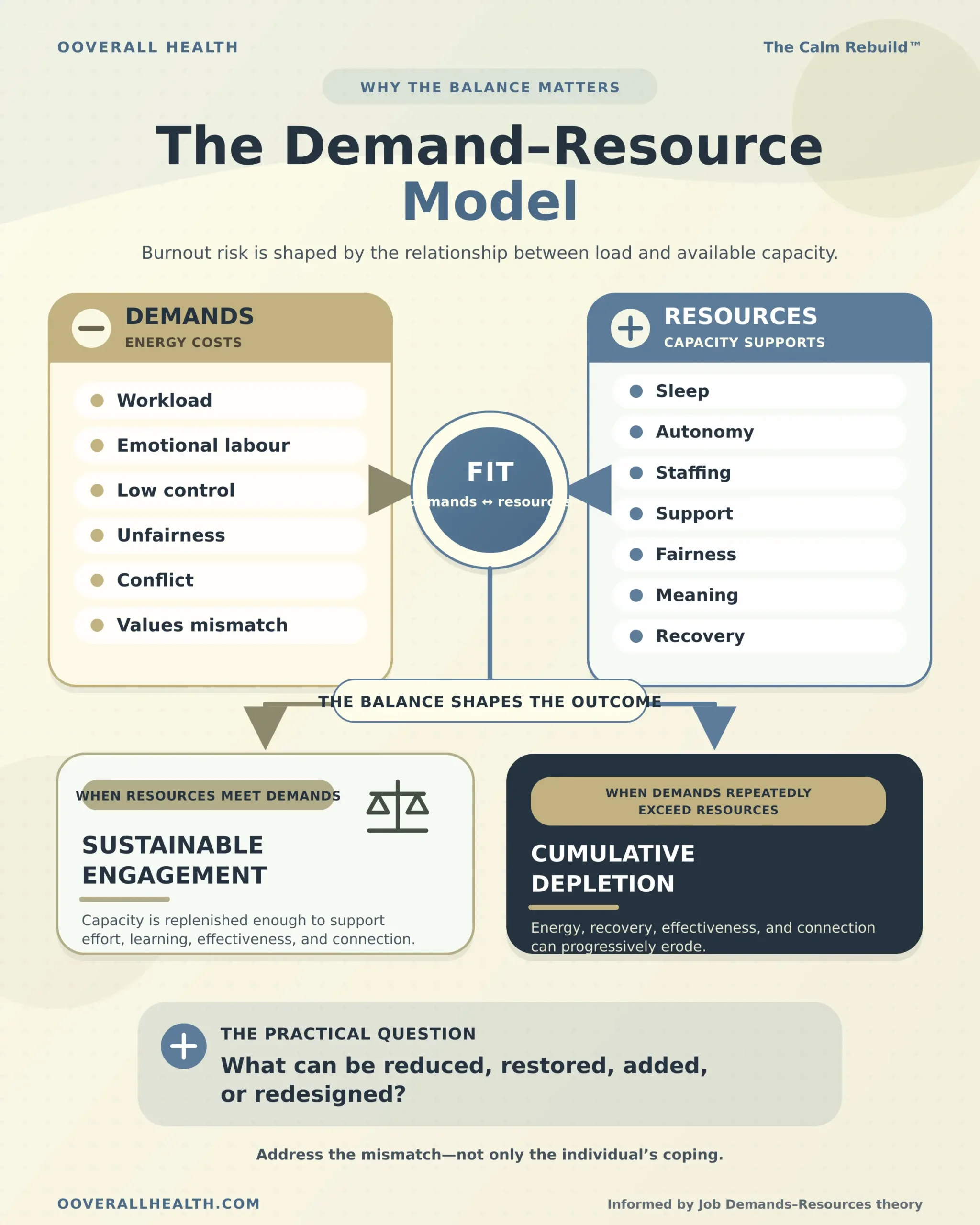
Burnout is rarely the result of one bad habit. It more often develops when demands repeatedly exceed resources and the person has too little control, recovery, support, fairness, or meaning.
The main pathways include:
- Workload beyond capacity: complexity, interruptions, emotional labour, understaffing, constant availability, and high consequences—not only task count.
- Low control: little influence over schedule, methods, priorities, pace, or staffing.
- Conflicting expectations: unclear success standards or forced choices between speed and quality, productivity and safety, or policy and ethics.
- Insufficient reward: inadequate pay, respect, feedback, security, fairness, advancement, or meaningful results.
- Community breakdown: bullying, isolation, discrimination, poor leadership, conflict, and low psychological safety.
- Values conflict and unfairness: opaque decisions, unequal burdens, favouritism, or moral distress.
- Inadequate recovery: shift work, caregiving, illness, long commutes, financial insecurity, and after-hours communication consuming restorative time.
A weekend cannot reliably repair a system that recreates the same depletion every Monday.
Who Is Most at Risk?
Risk tends to rise when several factors combine:
- consistently high workload or long hours;
- healthcare, education, caregiving, emergency, or public-facing work;
- shift work, on-call work, or irregular schedules;
- low autonomy and high responsibility;
- bullying, discrimination, unsafe conditions, or moral distress;
- inadequate staffing, tools, training, or leadership support;
- job insecurity or financial pressure;
- perfectionism, over-responsibility, or difficulty delegating;
- neurodivergence, illness, disability, pain, or sensory overload;
- repeated exposure to distress or trauma;
- caregiving and invisible labour outside paid work;
- weak social support or limited access to respite;
- poor sleep or an untreated sleep disorder.
Personal patterns influence vulnerability but do not erase structural causes. Resilience training cannot substitute for changing unsafe staffing, harassment, or impossible workloads.
Signs and Symptoms of Burnout
Burnout is better recognized as a pattern across domains than as a checklist of isolated complaints.
Emotional signs
- feeling emotionally drained or numb;
- irritability, impatience, or a shorter temper;
- dread before work;
- cynicism or loss of meaning;
- reduced empathy;
- feeling trapped, powerless, or ineffective;
- increased anxiety or tearfulness.
Cognitive signs
- brain fog;
- forgetfulness;
- difficulty concentrating or prioritizing;
- slower decisions;
- reduced creativity;
- repetitive worry or rumination;
- mistakes that are unusual for you.
Physical signs
- fatigue that does not fully resolve with rest;
- insomnia, early waking, or unrefreshing sleep;
- headaches or muscle tension;
- appetite or digestive changes;
- palpitations or feeling “wired”;
- reduced exercise tolerance;
- getting sick more often.
Physical symptoms deserve appropriate evaluation. Burnout does not explain every symptom, and similar complaints can occur with anemia, thyroid disorders, sleep apnea, infection, medication effects, perimenopause, depression, anxiety, and other conditions.
Behavioural and work-related signs
- procrastination or avoidance;
- working longer to compensate for reduced focus;
- checking messages compulsively;
- withdrawing from colleagues, friends, or family;
- skipping meals, movement, appointments, or medication;
- using caffeine, alcohol, food, or other substances to regulate energy or emotion;
- increased absenteeism or thoughts of leaving;
- reduced quality, confidence, or satisfaction.
High-functioning burnout can remain hidden because output stays acceptable while the personal cost rises. Learn the less obvious pattern in The Signs of High-Functioning Burnout.
A Responsible Burnout Self-Check
A self-check cannot diagnose burnout or rule out another condition. Ask:
- Has work-related exhaustion persisted for several weeks or longer?
- Do I feel increasingly detached, negative, or cynical about my work?
- Has my confidence, effectiveness, or ability to concentrate declined?
- Does time away provide meaningful recovery, or only brief relief?
- Which demands repeatedly exceed my current resources?
- What has changed in sleep, appetite, mood, pain, substance use, or physical health?
- Are the symptoms mainly work-related, or do they affect every area of life?
- Have people close to me noticed a change?
- Am I sacrificing basic health needs to maintain performance?
- Could a medical condition, medication, sleep disorder, depression, anxiety, grief, or trauma be contributing?
Research instruments include the licensed Maslach Burnout Inventory, Burnout Assessment Tool, and Copenhagen Burnout Inventory. Scores are screening information, not a stand-alone diagnosis.[8]
Evidence-Based Solutions: What Helps First?
Recovery requires reducing or redesigning harmful demands while rebuilding depleted resources.
1. Identify the demand–resource mismatch
For seven days, track:
- the demands that drain you most;
- when energy, focus, or patience drops;
- sleep duration and quality;
- activities that genuinely restore you;
- what could be delayed, delegated, shortened, or stopped;
- where control, clarity, support, fairness, or resources are missing.
This turns a vague feeling into a changeable map.
2. Change work conditions where possible
Organizational and individual interventions can reduce burnout, although effects vary by setting.[9–12] Useful changes include:
- clarifying the three highest-priority outcomes;
- reducing unnecessary meetings and notifications;
- renegotiating workload, deadlines, or scope;
- protecting uninterrupted work periods;
- improving staffing, equipment, supervision, or accommodations;
- documenting unsafe practice and involving occupational health, a union, human resources, or legal advice when appropriate.
Self-care cannot compensate for ongoing harm, but it may support safer decisions and advocacy.
3. Rebuild sleep
Adults generally need at least seven hours of sleep, although needs vary.[13] Begin with a consistent wake time, realistic sleep window, morning light, and lower evening stimulation. Persistent insomnia, loud snoring, gasping, restless legs, or severe daytime sleepiness should be assessed.
4. Use movement as support, not punishment
Physical activity supports sleep, mood, cardiovascular health, and stress management.[14] During severe depletion, start below your previous training level. Brief walking, mobility, or light resistance work may be more sustainable than an intense program. Increase gradually; seek medical guidance for concerning symptoms.
5. Restore regular nutrition
No food or supplement has been proven to cure burnout. Nutrition supports the systems involved in energy, cognition, sleep, and general health.
Prioritize:
- regular meals or substantial snacks when appetite is disrupted;
- adequate protein across the day;
- fibre-rich carbohydrates such as oats, beans, lentils, fruit, and whole grains;
- vegetables, nuts, seeds, and healthy fats;
- water according to thirst and health needs;
- less dependence on caffeine, alcohol, or sugar to force energy changes.
Mediterranean-style dietary patterns are associated with better mental-health outcomes, but direct burnout-treatment evidence is limited.[15] Avoid “adrenal support” stacks or restrictive detox plans without a documented indication.
6. Add nervous-system regulation practices
Slow breathing, mindfulness, progressive muscle relaxation, gentle rhythmic movement, and grounding may reduce perceived stress or support autonomic regulation.[16–18] They are tools, not proof that a “vagus nerve reset” cures burnout.
Try one minute:
- Place both feet on the floor.
- Look around and name three neutral or pleasant things.
- Let the exhale become slightly longer than the inhale.
- Keep the breath comfortable; do not force a large inhale.
- Stop if you become dizzy, panicky, or more distressed.
If closing your eyes or focusing internally feels unsafe, keep your eyes open, orient to the room, walk slowly, hum, stretch, or focus on an external object.
7. Use trauma-informed principles
Trauma-informed care emphasizes safety, choice, collaboration, trust, and empowerment. It does not assume every burned-out person has trauma. Offer options rather than rigid rules, pace change, avoid forced disclosure, and distinguish burnout from trauma symptoms.
Functional medicine considerations
A functional or integrative assessment can help when it is evidence-based and coordinated with standard care. Its purpose is to investigate plausible contributors—not order every available panel.
A qualified clinician may consider:
- complete blood count and iron studies when anemia or iron deficiency is plausible;
- thyroid testing when symptoms and history support it;
- nutrient or glucose testing when clinically indicated;
- sleep disorders, medication effects, chronic illness, pain, or perimenopause;
- depression, anxiety, ADHD, trauma, grief, or substance-use concerns.
Hair mineral analysis, broad food-intolerance panels, random cortisol testing, and commercial microbiome scores do not diagnose burnout. Testing should answer a clinical question.
| Complete OOverall Health’s Burnout Capacity Check-In to map physical, cognitive, emotional, relational, and work capacity before choosing your first recovery target. |
A Practical Seven-Day Action Plan
- Day 1—Name it: Rate energy, focus, emotional range, sleep, symptoms, and work function from 0 to 10.
- Day 2—Check safety: Arrange care for persistent, severe, or worsening symptoms. Seek urgent help for suicidal thoughts or acute physical danger.
- Day 3—Protect recovery: Create 20 minutes without work, caregiving tasks, news, or a performance goal.
- Day 4—Reduce demand: Delay, delegate, shorten, cancel, or renegotiate one nonessential task.
- Day 5—Stabilize basics: Plan one repeatable protein-and-fibre meal or snack and reduce late caffeine.
- Day 6—Ask for help: Request one specific form of support, such as a priority decision, deadline change, or protected focus block.
- Day 7—Review: Identify what helped, what recreated depletion, and the next constraint requiring professional or organizational support.
What the Evidence Supports, and What Remains Uncertain
Research-supported findings
- WHO defines burnout as an occupational phenomenon arising from chronic workplace stress that has not been successfully managed.[1]
- Exhaustion, mental distance or cynicism, and reduced professional efficacy are its core dimensions.[1]
- Burnout is associated with depression, anxiety, sleep problems, and cognitive difficulties, but these require differential assessment.[2,3,7]
- Workload, low control, unfairness, weak community, insufficient reward, and values conflict are important contributors.
- Both organizational and person-directed interventions may help; changing work conditions is a central part of prevention and recovery.[9–12]
- Sleep, movement, support, and stress-management practices support recovery capacity.[13,14,16–18]
Emerging or mixed evidence
- Cortisol, autonomic function, inflammation, and brain-imaging findings are inconsistent; no biomarker diagnoses burnout.[6]
- Somatic practices, yoga, breathing, and biofeedback may support regulation. Direct burnout evidence is smaller than the broader stress literature.[16–19]
- Dietary patterns may support mental and physical health, but nutrition-specific burnout trials remain limited.[15]
Expert opinion and practice framework
Reasonable clinical or coaching principles include:
- assess capacity across physical, cognitive, emotional, relational, and work domains;
- stabilize basic needs before adding complex protocols;
- treat workload and boundaries as interventions, not optional extras;
- use regulation practices to support choice and function, not to tolerate preventable harm;
- plan relapse prevention early.
Frequently Asked Questions
1. Is burnout a medical diagnosis?
No. WHO classifies burnout as an occupational phenomenon, not a medical condition. Its symptoms still deserve assessment because depression, anxiety, insomnia, and medical problems may coexist.
2. What are the three main signs of burnout?
The three defining dimensions are exhaustion, increased mental distance or cynicism toward work, and reduced professional efficacy.
3. How do I know whether I am burned out?
Look for a persistent work-linked pattern across the three dimensions, declining function, and inadequate recovery. A clinician can help evaluate overlapping mental-health, sleep, medication, and medical contributors.
4. Can you be burned out and still productive?
Yes. Some people maintain output by working longer, sacrificing sleep, withdrawing socially, or using urgency and caffeine. Stable performance does not mean the cost is sustainable.
5. Is burnout the same as being tired?
No. Tiredness is one symptom. Burnout also involves detachment or cynicism and reduced work-related effectiveness.
6. Is burnout a nervous-system breakdown?
No scientific definition describes burnout as a complete nervous-system breakdown. Stress regulation may change, but autonomic and cortisol findings are inconsistent, and the nervous system is not necessarily permanently damaged.
7. Does burnout mean cortisol is high?
Not necessarily. Studies report high, low, unchanged, and differently timed cortisol patterns. A random cortisol test cannot diagnose burnout.
8. Can burnout cause physical symptoms?
Burnout and chronic stress can be associated with sleep problems, headaches, muscle tension, digestive changes, fatigue, and palpitations. These symptoms also have other causes and should not automatically be attributed to burnout.
9. Can burnout turn into depression?
Burnout and depression are strongly related and can coexist. Burnout does not inevitably become depression, but persistent low mood, hopelessness, loss of pleasure, or suicidal thinking requires professional assessment.
10. Do I need to quit my job?
Not always. Recovery may involve workload reduction, clearer priorities, accommodations, leave, boundaries, role redesign, or leadership changes. In harmful or unchangeable settings, leaving may become the safest option.
11. How long does burnout recovery take?
There is no universal timeline. Severity, duration, sleep, health, finances, workplace flexibility, support, and whether the demands change all influence recovery.
12. Can a vacation cure burnout?
A vacation may provide relief. If the same workload, low control, conflict, or values mismatch returns unchanged, improvement may not last.
Conclusion: Burnout Is a Capacity Problem, Not a Character Flaw
Burnout is not laziness, weakness, or proof that you are unsuited to meaningful work. It is a recognizable occupational pattern that can emerge when chronic demands repeatedly exceed the resources, control, fairness, support, and recovery available.
Burnout affects real functioning. Chronic stress can influence sleep, cognition, emotion, behaviour, and physical health. Yet there is no universal biomarker, proven “adrenal fatigue” explanation, or single nervous-system reset.
Recovery starts by naming the pattern, checking for other causes, reducing harmful demands, and rebuilding health and sustainable work.
| Continue with The Complete Guide to Burnout Recovery to build a staged plan for stabilization, capacity rebuilding, workplace change, and relapse prevention. |
| The Calm Rebuild™— If insight is not enough and you need structured support, The Calm Rebuild™ is OOverall Health’s 12-week high-performance anxiety and burnout recovery program. It integrates capacity assessment, sleep and lifestyle foundations, nervous-system regulation, behaviour change, boundaries, work-function recovery, and relapse prevention. |
Featured Snippet Opportunities
- What is burnout? Burnout is an occupational phenomenon that develops when chronic workplace stress has not been successfully managed. It is marked by exhaustion, growing mental distance or cynicism toward work, and reduced professional efficacy. Burnout is not classified as a medical condition, and its symptoms can overlap with depression, anxiety, sleep disorders, and physical illness.
- Three signs of burnout:The three dimensions of burnout are:
- Exhaustion: Feeling physically, mentally, or emotionally depleted by work.
- Mental distance or cynicism: Becoming detached, negative, numb, or resentful toward the job.
- Reduced professional efficacy: Feeling less capable, productive, effective, or accomplished at work.
- Burnout vs. stress:Stress and burnout are related but not identical. When workplace pressure persists and recovery remains inadequate, the pattern may progress:
- Acute stress: Temporary tension, urgency, or fatigue that improves with recovery.
- Chronic stress: Continuing pressure with incomplete recovery and accumulating symptoms.
- Burnout: Persistent work-related exhaustion, mental distance or cynicism, and reduced professional efficacy.
- Can burnout cause physical symptoms? Burnout can be accompanied by physical symptoms such as persistent fatigue, sleep disruption, headaches, muscle tension, digestive changes, and appetite changes. These symptoms are real but not specific to burnout. Because they may also reflect depression, sleep disorders, medication effects, or medical conditions, persistent, severe, or worsening symptoms deserve professional assessment.
- Is burnout a mental illness? Burnout is not classified as a mental illness in the WHO’s ICD-11. It is an occupational phenomenon linked to chronic workplace stress that has not been successfully managed. However, burnout can seriously affect functioning and may coexist with depression, anxiety, sleep disorders, or other conditions that need professional assessment.
- How do you recover from burnout?Burnout recovery usually requires both restoration and redesign:
- Identify the mismatch between demands, resources, and recovery.
- Reduce or redesign the demands driving depletion.
- Rebuild sleep, nutrition, and tolerable movement.
- Add practical regulation skills.
- Seek assessment for persistent or worsening symptoms.
- Redesign workload, boundaries, support, and job conditions so recovery can last.
Author
Primary author: Oluchi Onwukwe, MA Counselling Psychology, Canadian Certified Counsellor, with relevant training in somatic foundations, nervous-system regulation, trauma-informed care, mindfulness interventions, and burnout recovery.
Disclaimer
This content is intended for educational and informational purposes only and should not be considered medical advice. Readers should consult a qualified healthcare professional regarding personal health concerns.
References
- World Health Organization. Burn-out an “occupational phenomenon”: International Classification of Diseases. Published May 28, 2019. https://www.who.int/news/item/28-05-2019-burn-out-an-occupational-phenomenon-international-classification-of-diseases
- Koutsimani P, Montgomery A, Georganta K. The relationship between burnout, depression, and anxiety: A systematic review and meta-analysis. Frontiers in Psychology. 2019;10:284. doi:10.3389/fpsyg.2019.00284. https://pubmed.ncbi.nlm.nih.gov/30918490/
- Bianchi R, Schonfeld IS, Laurent E. Burnout-depression overlap: A review. Clinical Psychology Review. 2015;36:28–41. doi:10.1016/j.cpr.2015.01.004. https://pubmed.ncbi.nlm.nih.gov/25638755/
- McEwen BS. Stress, adaptation, and disease: Allostasis and allostatic load. Annals of the New York Academy of Sciences. 1998;840:33–44. doi:10.1111/j.1749-6632.1998.tb09546.x. https://pubmed.ncbi.nlm.nih.gov/9629234/
- McEwen BS, Bowles NP, Gray JD, et al. Mechanisms of stress in the brain. Nature Neuroscience. 2015;18:1353–1363. doi:10.1038/nn.4086. Related overview: https://pubmed.ncbi.nlm.nih.gov/28856337/
- Dahlman AS, Jonsdottir IH, Hansson C. The hypothalamo-pituitary-adrenal axis and the autonomic nervous system in burnout. Biological Psychology. 2021;162:108102. doi:10.1016/j.biopsycho.2021.108102. https://pubmed.ncbi.nlm.nih.gov/34266613/
- Koutsimani P, Montgomery A. Burnout and cognitive performance. International Journal of Environmental Research and Public Health. 2021;18(4):2145. https://pubmed.ncbi.nlm.nih.gov/33671754/
- Maslach C, Jackson SE, Leiter MP. Maslach Burnout Inventory Manual. Mind Garden. https://www.mindgarden.com/117-maslach-burnout-inventory-mbi
- Panagioti M, Panagopoulou E, Bower P, et al. Controlled interventions to reduce burnout in physicians: A systematic review and meta-analysis. JAMA Internal Medicine. 2017;177(2):195–205. doi:10.1001/jamainternmed.2016.7674. https://pubmed.ncbi.nlm.nih.gov/27918798/
- Cohen C, Pignata S, Bezak E, Tie M, Childs J. Workplace interventions to improve well-being and reduce burnout for nurses, physicians and allied healthcare professionals: A systematic review. BMJ Open. 2023;13:e071203. https://pubmed.ncbi.nlm.nih.gov/37385740/
- Catapano P, Cipolla S, Sampogna G, et al. Organizational and individual interventions for managing work-related stress in healthcare professionals: A systematic review. Medicina. 2023;59(10):1866. https://pubmed.ncbi.nlm.nih.gov/37893584/
- Kiratipaisarl W, et al. Individual and organizational interventions to reduce burnout: A systematic review. 2024. https://pubmed.ncbi.nlm.nih.gov/39478552/
- Centers for Disease Control and Prevention. Managing Stress. Updated May 12, 2026. https://www.cdc.gov/mental-health/living-with/index.html
- Centers for Disease Control and Prevention. Health Benefits of Physical Activity for Adults. Updated March 10, 2026. https://www.cdc.gov/physical-activity-basics/health-benefits/adults.html
- Lassale C, Batty GD, Baghdadli A, et al. Healthy dietary indices and risk of depressive outcomes: A systematic review and meta-analysis of observational studies. Molecular Psychiatry. 2019;24:965–986. doi:10.1038/s41380-018-0237-8.
- Laborde S, Allen MS, Borges U, et al. Effects of voluntary slow breathing on heart rate and heart rate variability: A systematic review and meta-analysis. Neuroscience & Biobehavioral Reviews. 2022;138:104711. https://pubmed.ncbi.nlm.nih.gov/35623448/
- Zaccaro A, Piarulli A, Laurino M, et al. How breath-control can change your life: A systematic review on psychophysiological correlates of slow breathing. Frontiers in Human Neuroscience. 2018;12:353. https://pubmed.ncbi.nlm.nih.gov/30245619/
- Harvard Health Publishing. How to reduce stress and anxiety through movement and mindfulness. Updated August 11, 2025. https://www.health.harvard.edu/mental-health/how-to-reduce-stress-and-anxiety-through-movement-and-mindfulness
- Pascoe MC, Thompson DR, Ski CF. Yoga, mindfulness-based stress reduction and stress-related physiological measures: A meta-analysis. Psychoneuroendocrinology. 2017;86:152–168. https://pubmed.ncbi.nlm.nih.gov/28963884/
- Mayo Clinic. Job burnout: How to spot it and take action. Updated November 30, 2023. https://www.mayoclinic.org/healthy-lifestyle/adult-health/in-depth/burnout/art-20046642
- Cleveland Clinic. Signs of Burnout: What It Is, How It Feels and How To Recover. Updated January 27, 2026. https://health.clevelandclinic.org/signs-of-burnout
- Johns Hopkins Medicine. Sleepless Nights? Try Stress Relief Techniques. Updated 2026. https://www.hopkinsmedicine.org/health/wellness-and-prevention/sleepless-nights-try-stress-relief-techniques
- Institute for Quality and Efficiency in Health Care. Depression: Learn More—What is burnout? InformedHealth.org. Updated April 15, 2024. https://www.ncbi.nlm.nih.gov/books/NBK279286/