
Why You Wake Up at 3 AM With Your Mind Racing
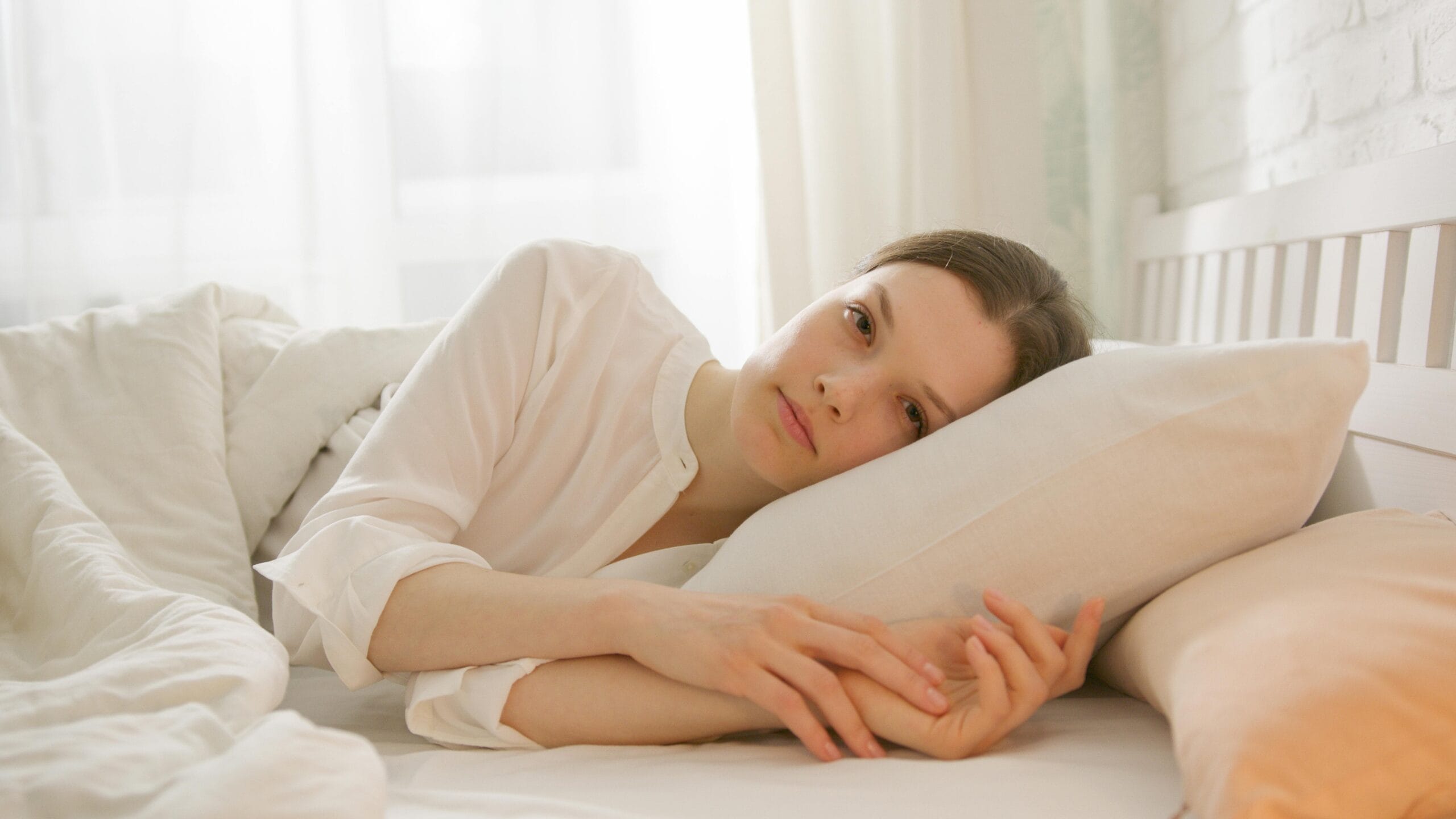
You drift off exhausted… and then your eyes snap open.
It’s dark. The room is quiet. The clock says 3:00 a.m.
For a second, you feel the weight of your fatigue. Then your mind lights up like a control room. You replay conversations. You forecast worst-case scenarios. You build to-do lists. You solve problems you didn’t even know you had, until this moment.
And the most frustrating part?
You’re not choosing to think. Your brain is running you.
If you’re a high-functioning adult under chronic stress, this pattern often isn’t random. It’s commonly a combination of normal sleep biology (sleep gets lighter in the second half of the night) plus stress-system activation (hyperarousal) plus real-life triggers like caffeine, alcohol, light exposure, reflux, hormonal shifts, or breathing disruptions during sleep. [1]
This article explains what’s really going on—and gives you a practical, evidence-based way to stop the 3 a.m. spiral without resorting to generic advice.
The 3 a.m. wake-up that high performers keep misreading
Many people assume waking at 3 a.m. is a sign that something is “wrong” with them.
A more accurate read is this: 3 a.m. is a vulnerable point in the night for many adults. Sleep naturally cycles through stages, and for people who go to bed around 10–11 p.m., 3 a.m. often lands closer to a lighter part of sleep—especially REM, when you’re easier to wake. [2]
But here’s what high performers tend to get wrong:
They treat the problem as a thinking problem (“I need to stop overthinking”) instead of a state problem (“My system is in activation mode”).
Insomnia science has long described “hyperarousal” as a core driver: a state of increased physiological, cognitive, and emotional activation that disrupts sleep initiation and sleep maintenance. [3]
So when you wake up at 3 a.m. with your mind racing, the key question is not:
“Why am I like this?”
It’s:
“What is my nervous system responding to, and why is it staying on?”
That’s where real change starts.
To ground this in something practical, consider a common high-performer sequence:
You spend the day in control mode (decisions, deadlines, expectations). You stay composed. You power through. Your body adapts by running a higher baseline activation. Chronic stress is known to disrupt multiple systems, including sleep timing, sleep quality, and cognitive function. [4]
Then, at night, when there’s finally nothing to manage, the mind tries to process everything you postponed. If your sleep is already fragile in the second half of the night, that processing becomes a full wake-up, and the spiral begins. [5]
This is also why this pattern often appears alongside burnout symptoms: emotional brittleness, brain fog, irritability, reduced capacity, and that sense of being “on” even when you’re resting. [6]
Why 3 a.m. is a perfect storm in sleep biology
To stop treating 3 a.m. waking like a mystery, you need the basic mechanics of sleep regulation.
Sleep is driven by two forces, not one
The most useful framework is the two-process model: sleep is regulated by an interaction between a homeostatic sleep drive (sleep pressure that builds during wakefulness and dissipates during sleep) and a circadian process that influences timing and alertness across the day-night cycle. [7]
Here’s what matters for 3 a.m.:
By the second half of the night, sleep pressure has partially drained, meaning it’s easier to wake fully. [8]
At the same time, circadian alerting signals gradually ramp toward morning in many people, which can make sleep increasingly fragile as the night progresses. [9]
So even small disturbances, an anxious thought, a noise, reflux, bladder fullness, a temperature change, are more likely to produce a complete awakening at 3 a.m. than at 12:30 a.m. [10]
Your sleep cycles make awakenings more likely later at night
Sleep occurs in cycles (often about 70–120 minutes), and sleep architecture shifts across the night. More of your deep non-REM sleep tends to occur earlier, while a larger proportion of REM sleep occurs in the second half of the night. [11]
REM is not “bad.” It’s important for emotional processing and memory. But it is typically lighter, and awakenings around REM are common—especially if your body is already slightly activated. [12]
Cortisol rhythm: not panic, but timing
Cortisol follows a circadian rhythm. In a typical pattern, cortisol is lowest near midnight and then begins rising after sleep onset, continuing toward the morning. [13]
That rise is normal. The problem is that if your stress system is sensitized, normal hormonal shifts can feel like an internal “alarm” rather than a gentle incline toward wakefulness. Sleep researchers describe insomnia as involving hyperarousal across biological and cognitive levels. [3]
Body temperature shifts can also destabilize sleep
Core body temperature follows a circadian pattern: it declines at night and rises again toward the morning, with a nadir occurring before your natural wake time. [14]
If you’re already sleeping lightly, small temperature changes (too warm, too cold, sweating, ambient heat shifts) can nudge the brain into wakefulness more easily during this part of the night. [15]
At this point, the pattern should look less mystical:
3 a.m. is often where lighter sleep + lower sleep pressure + rising circadian alerting forces intersect. [16]
Now add one more ingredient—stress-system activation—and you get the classic mind-racing wake-up.
Why your mind races: chronic stress effects and nervous system dysregulation
If the biology sets the stage, your nervous system state determines whether you fall back asleep—or spiral.
Hyperarousal: the engine behind mind-racing insomnia
The hyperarousal model of insomnia is one of the most established explanations for persistent insomnia symptoms, including waking during the night and struggling to return to sleep. It frames insomnia as involving elevated arousal—from molecular and endocrine systems to cognition and emotion. [17]
In plain terms, your brain and body are acting like you need to be awake.
That can show up as:
A racing mind (problem-solving, catastrophizing, reviewing). [18]
Physical activation (tight chest, fast heartbeat, restless body). [19]
A sense of urgency (“I should use this time,” “I can’t waste tomorrow,” “I need to fix this now”). This is a common cognitive-emotional signature of insomnia-related arousal. [20]
Sleep reactivity: why stress hits your sleep first
Some people are especially vulnerable to stress-related sleep disruption—a trait researchers call sleep reactivity. Higher sleep reactivity increases risk for insomnia and can create a stress–sleep feedback loop: stress disrupts sleep, and poor sleep increases emotional vulnerability the next day. [21]
If you’re a high-stakes professional, that loop is easy to recognize:
You wake at 3 a.m. → you worry about performance tomorrow → that worry activates the system → you stay awake → you feel worse the next day → stress increases → the cycle strengthens. [22]
Burnout symptoms often show up as “sleep architecture collapse.”
In burnout states, people often report fragmented sleep, early awakenings, non-restorative sleep, and increased mental distance or numbness. The World Health Organization frames burnout as an occupational phenomenon arising from chronic workplace stress that hasn’t been successfully managed and characterizes it by exhaustion, mental distance/cynicism, and reduced professional efficacy. [23]
Even when burnout is defined occupationally, the body-level experience is often nervous system-driven: sustained stress physiology, a narrowed “window of tolerance,” and difficulty downshifting into deep rest. [24]
This is why 3 a.m. waking is often one of the earliest signs that your system is moving from “coping” to dysregulation.
The high performer’s specific trigger: delayed processing
High performers often run on “containment” during the day.
You push emotion down. You delay hard thoughts. You move fast. You triage. You do what needs to be done. That’s functional—until the only time your brain has to process is the middle of the night.
At 3 a.m., your executive brain is tired, your emotional brain is reactive, and your sleep is lighter. It becomes the perfect window for intrusive thinking and threat scanning. [5]
This is not a weakness. It’s a predictable outcome of chronic stress effects on sleep and cognition. [25]
What else can wake you up at 3 a.m.
Sometimes the racing mind is the primary driver. Sometimes it’s a secondary reaction to a physical trigger.
If you repeatedly wake at the same time, it’s worth considering these common (and treatable) contributors.
Sleep-disordered breathing
Obstructive sleep apnea can cause repeated nighttime arousals, sometimes with gasping, choking, snoring, or frequent awakenings, and can present as “I keep waking up and can’t stay asleep.” [26]
Alcohol can worsen snoring and sleep apnea by relaxing upper airway muscles, which matters if your 3 a.m. wake-ups follow evening drinks. [27]
Nocturia and bladder-related awakenings
Waking to urinate more than once a night may indicate nocturia, which can significantly disrupt sleep quality. [28]
Population research has found bathroom trips are among the most commonly reported reasons for nocturnal awakenings. [29]
Also, nocturia can be linked with other conditions (including sleep disorders), so it’s not always “just hydration.” [30]
GERD and nighttime reflux
Reflux is a classic sleep disruptor. Nighttime reflux can cause awakenings, and sleep disruption can also worsen reflux sensitivity—creating a bidirectional problem. [31]
If you notice burning, throat irritation, coughing, or sour taste during wake-ups, reflux belongs on your shortlist. [32]
Hormonal shifts: perimenopause and menopause
Sleep changes are common in perimenopause, often linked to hot flashes and night sweats, but changes in sleep patterns can also occur even without obvious hot flashes. [33]
If you’re waking sweaty, overheated, or suddenly alert with temperature discomfort, hormonal factors may be relevant, especially if cycles are changing or other perimenopause symptoms are present. [34]
Light exposure and screens
Light exposure at night can make the brain interpret the environment as daytime, and controlled research shows room light in the evening can suppress melatonin. [35]
Evening exposure to light-emitting devices has been shown to suppress melatonin and delay circadian timing in experimental studies. [36]
If you wake at 3 a.m. and immediately look at a bright screen, you may unintentionally amplify wakefulness and make returning to sleep harder. [37]
A short checklist for when to get medical support
If any of these apply, it’s worth speaking to a clinician rather than self-treating indefinitely:
- Loud snoring, witnessed breathing pauses, or waking up gasping/choking (possible sleep apnea). [38]
- Frequent nighttime urination (possible nocturia or related conditions). [39]
- Persistent reflux symptoms or nighttime heartburn. [40]
- Ongoing insomnia (difficulty falling asleep, staying asleep, or early awakenings) with daytime impairment that persists for weeks to months—especially if offering yourself “sleep hygiene” hasn’t moved the needle. Clinical guidelines emphasize structured, evidence-based insomnia treatment rather than relying only on basic tips. [41]
A step-by-step plan for stopping 3 a.m. wake-ups and racing thoughts
You don’t need more discipline at 3 a.m.
You need a protocol that assumes two truths:
Your sleep is biologically more fragile in the second half of the night. [42]
If your nervous system is activated, trying to force sleep will backfire. Hyperarousal models explicitly describe insomnia as involving heightened arousal that disrupts sleep. [3]
What to do in the moment
Stop negotiating with your thoughts. Start shifting state.
Keep the light low and avoid “time checking.”
Light exposure can suppress melatonin and increase alertness, especially if you use bright screens. [43]
(If you must check the time, do it once, then turn the clock away.)
Give yourself a short window to drift back.
Sleep clinicians commonly advise not to stay in bed awake for long periods. A practical approach is: if you’re awake and frustrated after about 15–20 minutes, get up briefly. [44]
This aligns with the stimulus-control principle in CBT-I: re-associating the bed with sleep rather than wakeful anxiety. [45]
Do a “quiet body” activity, not a “productive mind” activity.
Choose something boring and low-light: sitting in a chair, reading paper pages, gentle stretching, listening to calm audio at low volume.
The goal is not entertainment. It’s downshifting arousal.
Use slow breathing to communicate safety to the system.
Slow breathing is commonly used to reduce physiological arousal. Hyperarousal is recognized as a state of prolonged fight-or-flight activation, and downshifting techniques aim to reverse that activation. [19]
Try a simple pattern: inhale gently, long exhale, repeat. You’re not chasing perfect calm—you’re signalling “stand down.”
Try cognitive “containment,” not cognitive combat.
Instead of arguing with your thoughts, contain them:
Write a brief “parking lot” note:
– What is the worry?
– What is one next step (tomorrow)?
Then stop.
Insomnia research highlights the role of cognitive-emotional reactivity and worry in sleep disruption; reducing the fuel matters. [46]
What to change the next day so 3 a.m. stops happening
Anchor your wake time.
The two-process model predicts that consistent wake timing helps stabilize circadian processes and strengthens sleep pressure patterns. [8]
Sleeping in may feel like recovery, but if it pushes your rhythm later and reduces sleep pressure, it can worsen nighttime awakenings.
Limit late-day caffeine with brutal honesty.
Caffeine has a mean half-life of about five hours in healthy adults, with wide variability (some people metabolize it much more slowly). [47]
If you’re waking at 3 a.m., treat caffeine timing as a serious experiment, not a personality trait.
Watch the alcohol–wake-up link.
Alcohol can make you sleepy initially, but evidence shows it disrupts sleep patterns and increases awakenings later in the night, and reduces REM sleep—often with a rebound effect as alcohol metabolizes. [48]
If your 3 a.m. awakenings cluster after drinks, this is not “just anxiety.” It’s physiology.
Fix evening light exposure like it matters—because it does.
Experimental research shows evening room light can suppress melatonin, and light-emitting eReaders can reduce evening sleepiness and shift circadian timing. [49]
A realistic move: dim lights and reduce screens in the last hour. Not perfection—consistency.
Use the gold-standard insomnia approach if this has become chronic
If you’ve been waking at 3 a.m. for weeks or months with daytime impairment, the most effective path is often CBT-I (cognitive behavioural therapy for insomnia), not just “sleep hygiene.”
The American College of Physicians[50] recommends CBT-I as the initial treatment for chronic insomnia disorder in adults. [51]
A CBT-I primer describes core components, such as sleep restriction therapy and stimulus control therapy, supported by cognitive therapy and sleep hygiene. [52]
Why this matters for 3 a.m. wake-ups:
Stimulus control targets conditioned arousal (bed = worry). [53]
Sleep restriction consolidates sleep by strengthening homeostatic sleep drive, which can reduce wake-after-sleep-onset over time. [52]
Cognitive therapy targets the thought patterns that trigger and extend wakefulness. [54]
If your mind races at 3 a.m., CBT-I is often the most “high ROI” intervention because it addresses both the behavioural conditioning and the cognitive arousal that keep the pattern alive. [55]
The mistakes that keep the 3 a.m. cycle alive and the deeper solution
If you’re stuck in 3 a.m. wake-ups, there are predictable mistakes that look reasonable—but strengthen the problem.
Common mistakes people make
Staying in bed wide awake for long periods
This can reinforce the bed as a cue for wakefulness and frustration, which is exactly what stimulus control therapy is designed to reverse. [56]
Turning on bright lights or scrolling your phone “just to calm down.”
Light exposure can suppress melatonin and increase alertness, and device-based light in the evening has been shown to affect sleepiness and circadian timing. [49]
Trying to “solve your life” at 3 a.m.
Nighttime problem-solving often feels urgent because the brain is in threat-management mode. Hyperarousal frameworks emphasize that insomnia is not simply a sleep deficit—it’s a 24-hour arousal regulation issue. [3]
Using alcohol as an off-switch
Alcohol may shorten sleep onset latency but increases sleep disruption later in the night and reduces REM sleep, contributing to fragmented sleep and next-day fatigue. [57]
Overcorrecting with long naps or sleeping in late
Because sleep is regulated by homeostatic pressure and circadian timing, irregular sleep patterns can reduce sleep pressure and destabilize sleep timing, making the second half of the night awakenings more likely. [8]
The deeper truth for high-functioning adults
If you’re a high-stakes professional with chronic stress, 3 a.m. waking is often not a sleep “tip” problem.
It’s a capacity problem.
Your system has learned that being on guard is normal. Your baseline has shifted.
This is the core of nervous system dysregulation in real life: difficulty switching from mobilization (drive, urgency, overcontrol) into downshift (rest, digestion, sleep). Hyperarousal in insomnia is one expression of that. [58]
And when this overlaps with burnout symptoms—exhaustion, cynicism/mental distance, reduced efficacy—it’s a clear sign that a deeper rebuild is needed, not more hacks. [59]
Introduction to The Calm Rebuild™
If you want a structured way out of 3 a.m. spirals—especially when they’re tied to burnout symptoms and chronic stress effects—this is where a deeper program can make sense.
On the OOverall Health [61], The Calm Rebuild™ is a 12-week, clinical-style transformation designed for high-functioning leaders who “cannot afford to crash,” with a focus on rebuilding nervous system stability and cognitive capacity rather than relying on surface-level stress management. [62]
It lays out a staged approach that begins with nervous system calibration and moves into identity and performance patterns that keep high achievers stuck in override (like perfectionism, overthinking, and internalized urgency), then builds toward sustainable resilience.
Importantly for the 3 a.m. problem: it explicitly names the “wired but revealed-at-night” pattern (racing thoughts in the early hours) as a sign of a sympathetic mobilization loop—meaning the program is designed for exactly the kind of night-time dysregulation this article describes. [63]
If you’re tired of collecting advice and want a clinical-grade structure that targets both nervous system regulation and the high-performer scripts that keep you activated, The Calm Rebuild is positioned as that deeper rebuild. [63]
Strong but calm conclusion
Waking up at 3 a.m. with your mind racing is rarely “random.”
For many adults, it’s where normal sleep architecture (lighter sleep later in the night) meets circadian biology (shifting hormonal and temperature rhythms) and an over-trained stress response (hyperarousal). [64]
If you treat it as a willpower problem, you’ll keep losing at 3 a.m.
If you treat it as a state problem—sleep biology plus nervous system activation—you can change it.
Start with what works: reduce light and stimulation, use stimulus control principles, anchor your wake time, and take caffeine and alcohol timing seriously. [65]
If it’s become chronic, use evidence-based insomnia treatment (CBT-I), which major medical organizations recommend as first-line. [41]
If it’s part of a larger burnout pattern—exhaustion, cognitive attrition, emotional brittleness—don’t just patch sleep. Rebuild capacity. [6]
References
[1] [2] [10] [12] [44] Why You Keep Waking Up at 3 a.m.
https://health.clevelandclinic.org/why-do-you-always-wake-up-at-3-a-m?utm_source=chatgpt.com
[3] [17] [18] [20] The hyperarousal model of insomnia: a review …
https://pubmed.ncbi.nlm.nih.gov/19481481/?utm_source=chatgpt.com
[4] [25] Stress & sleep: A relationship lasting a lifetime
https://www.sciencedirect.com/science/article/abs/pii/S0149763419301496?utm_source=chatgpt.com
[5] [11] [16] [42] [64] What Happens When You Sleep
https://www.sleepfoundation.org/how-sleep-works/what-happens-when-you-sleep?utm_source=chatgpt.com
[6] [23] [59] Burn-out an “occupational phenomenon”: International …
[7] The two-process model of sleep regulation: Beginnings and outlook
https://pubmed.ncbi.nlm.nih.gov/35502706/?utm_source=chatgpt.com
[8] Module 2. Regulation of Sleep: A Simple, Two-Process Model – CDC
[9] [PDF] Clinical Practice Guideline for the Treatment of Intrinsic Circadian …
https://aasm.org/resources/clinicalguidelines/crswd-intrinsic.pdf?utm_source=chatgpt.com
[13] Interactions between sleep, stress, and metabolism – PMC – NIH
https://pmc.ncbi.nlm.nih.gov/articles/PMC4688585/?utm_source=chatgpt.com
[14] [15] Spotlight on Circadian Rhythms and Sleep – PMC – NIH
https://pmc.ncbi.nlm.nih.gov/articles/PMC10225333/?utm_source=chatgpt.com
[19] [58] Hyperarousal in insomnia disorder: Current evidence and …
https://onlinelibrary.wiley.com/doi/full/10.1111/jsr.13928?utm_source=chatgpt.com
[21] The impact of stress on sleep: Pathogenic sleep reactivity as a …
https://pmc.ncbi.nlm.nih.gov/articles/PMC7045300/?utm_source=chatgpt.com
[22] [46] Hyperarousal and sleep reactivity in insomnia: current insights
https://pmc.ncbi.nlm.nih.gov/articles/PMC6054324/?utm_source=chatgpt.com
[24] Burnout phenomenon: neurophysiological factors, clinical …
https://pmc.ncbi.nlm.nih.gov/articles/PMC9478693/?utm_source=chatgpt.com
[26] [38] Obstructive sleep apnea – Symptoms and causes
https://www.sleepfoundation.org/nutrition/alcohol-and-sleep?utm_source=chatgpt.com
[28] [39] Nocturia: Causes, Symptoms, Diagnosis & Treatment
https://my.clevelandclinic.org/health/diseases/14510-nocturia?utm_source=chatgpt.com
[29] [60] The effect of nocturia on sleep – PMC – NIH
https://pmc.ncbi.nlm.nih.gov/articles/PMC3137590/?utm_source=chatgpt.com
[30] [61] Urinating more at night
https://medlineplus.gov/ency/article/003141.htm?utm_source=chatgpt.com
[31] Gastroesophageal Reflux Disease and Sleep Disorders – PMC
https://pmc.ncbi.nlm.nih.gov/articles/PMC2879818/?utm_source=chatgpt.com
[32] [40] Gastroesophageal reflux disease (GERD) – Symptoms and …
[33] [34] Perimenopause – Symptoms and causes
[35] [43] [49] [65] Exposure to Room Light before Bedtime Suppresses … – PMC
https://pmc.ncbi.nlm.nih.gov/articles/PMC3047226/?utm_source=chatgpt.com
[36] Evening use of light-emitting eReaders negatively affects …
https://www.pnas.org/doi/10.1073/pnas.1418490112?utm_source=chatgpt.com
[37] Blue light has a dark side
[41] [51] Management of Chronic Insomnia Disorder in Adults
https://pubmed.ncbi.nlm.nih.gov/27136449/?utm_source=chatgpt.com
[45] [53] [56] Stimulus Control and CBTI | Stanford Health Care
[47] Pharmacology of Caffeine – NCBI – NIH
https://www.ncbi.nlm.nih.gov/books/NBK223808/?utm_source=chatgpt.com
[50] [55] Cognitive-Behavioral Therapy for Insomnia: An Effective and …
https://pmc.ncbi.nlm.nih.gov/articles/PMC6796223/?utm_source=chatgpt.com
[52] [54] Cognitive Behavioural Therapy for Insomnia (CBT-I): A Primer – PMC
https://pmc.ncbi.nlm.nih.gov/articles/PMC10002474/?utm_source=chatgpt.com
[57] Alcohol and Sleep I: Effects on Normal Sleep – Ebrahim
https://onlinelibrary.wiley.com/doi/abs/10.1111/acer.12006?utm_source=chatgpt.com