How Chronic Stress Shrinks Your Capacity
Imagine waking up after another restless night, heart pounding, mind racing before your feet even hit the floor. Your body feels simultaneously exhausted and wired. You pour coffee hoping to fuel your brain, but the simplest tasks feel impossible. This is the feeling when chronic stress and burnout quietly sap your capacity – the mental energy, emotional resilience and physical strength you once had. You know this can’t be normal. You work hard, you care about your health, and yet something has changed. High-achievers experiencing burnout symptoms often feel “tired but wired,” as if their body is stuck in fight-or-flight mode. This state isn’t a personal failure – it’s a signal that chronic stress has rewired your nervous system and physiology. In this article, we’ll unpack exactly what happens to your body and mind under constant stress, why rest and caffeine aren’t enough, and how to actually recover from burnout by rebuilding your capacity from the ground up. You’ll feel deeply understood and find practical guidance – from breathwork to nutrition to mindset shifts – that lead to real, lasting relief.
When Stress Takes Over: The Problem Explained
Stress itself is not the enemy. In fact, your sympathetic nervous system (the “fight or flight” system) exists to protect you from immediate danger: it heightens your senses, quickens your heart, and floods your blood with energy. This response helped our ancestors escape predators. But today’s stressors – overflowing inboxes, looming deadlines, financial worries, even family conflicts – trigger that same ancient alarm system. The problem isn’t the occasional rush of adrenaline; it’s chronic stress with no real threat-ending. When stressors are always present, your body stays stuck in survival mode[1].
Over time, this leads to allostatic load – a concept meaning the cumulative “wear and tear” on your body and brain from chronic stress[2]. Allostasis (adaptation) is healthy in short bursts, but with persistent stress, the cost becomes high and long-term. The research is clear: elevated allostatic load is linked to numerous health problems. It disrupts neuroendocrine, immune, cardiovascular and metabolic systems[2]. In other words, your entire body is put under strain. Your heart pounds incessantly, your digestion falters, your sleep never feels restorative, and even your brain function begins to falter.
In this survival state, your body sacrifices long-term wellness for short-term alertness. Cortisol and adrenaline stay chronically elevated, which can shrink key brain regions (like the hippocampus and prefrontal cortex) and alter neurotransmitters[3]. In plain terms, chronic stress actually shrinks parts of your brain and shortens the branches of neurons – literally reducing your cognitive capacity[3]. Think of it like a computer running way too many processes: everything slows down, and even basic tasks require twice the effort. Your “mental RAM” is diminished, so focus and memory suffer.
Physically, your body is bearing an enormous load. Mayo Clinic warns that too much stress hormone exposure “can disrupt almost all the body’s processes,” putting you at higher risk for anxiety, depression, digestive problems, headaches, muscle tension, heart disease, high blood pressure and sleep problems[4]. It also lists weight gain and problems with memory and focus as common effects[5]. In high-performers, these translate into constant low-level anxiety, chronic gut issues, nagging aches, and that “foggy” brain that makes even email feel like climbing a mountain.

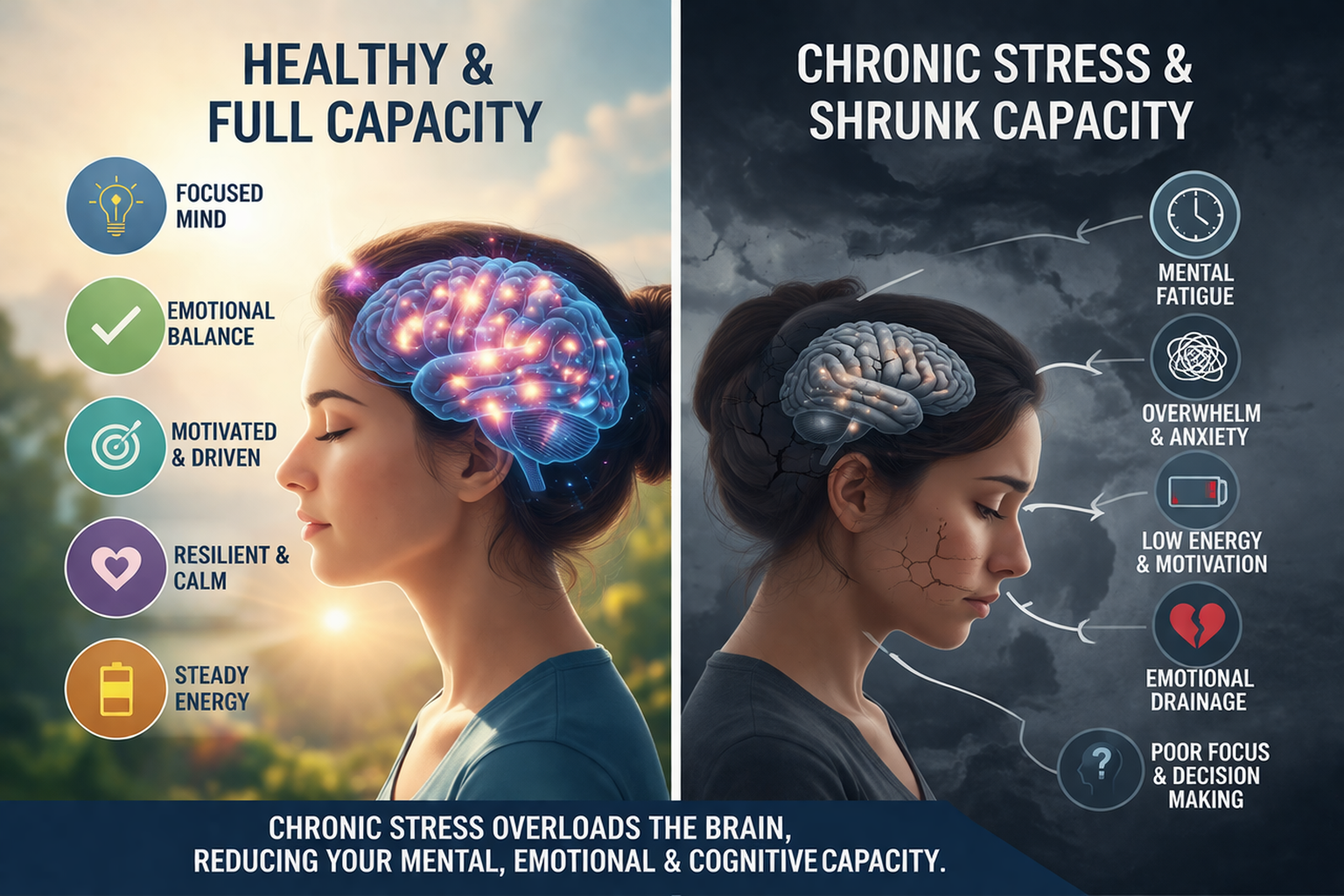
Figure: A high-achieving professional struggles with eye strain and exhaustion at her desk. Chronic stress can manifest as physical fatigue and headaches, even when it looks like you’re just pushing through your workload.
Behind the Scenes: How Your Body and Brain Change
To understand why rest alone doesn’t fix this, let’s zoom in on the nervous system. Normally, your autonomic nervous system keeps a balance: the sympathetic branch (fight-or-flight) activates under stress, and the parasympathetic branch (rest-and-digest) turns on to calm you down when the danger is gone[6]. Under chronic stress, the sympathetic system stays “on” far too often, and your parasympathetic system can’t fully kick in. This is called nervous system dysregulation.
Long-term dysregulation means your baseline state shifts. Adrenal glands keep churning out cortisol and adrenaline, so even at rest you feel keyed up or irritable. Your heart rate and blood pressure remain higher than they should be. You may notice trouble with digestion or libido because your body has suppressed these systems to prioritize survival[4][7]. In essence, your body “won’t let you relax” until the brain truly believes the danger is over – which is hard when you live in a constant deadline-driven culture.
Meanwhile, on the brain side, cortisol floods sensitive areas like the hippocampus (involved in memory) and prefrontal cortex (involved in focus, planning, and decision-making). Animal studies (and human studies in conditions like Cushing’s syndrome) have shown that chronic high cortisol can cause hippocampal and cortical atrophy – literally shrinking those parts of the brain – and reduce neuronal connections[3]. You might experience this as “brain fog”, poorer memory, and lowered cognitive flexibility. Stress also heightens activity in fear- and emotion-related regions (like the amygdala), making you more reactive and anxious. Over time, this rewiring means your window of tolerance (the range of stress you can handle while staying calm) narrows to a sliver. You’re stuck in a loop of hypervigilance, unable to truly rest.
Another vicious cycle involves the HPA axis (hypothalamus-pituitary-adrenal). Normally it should calm down after a stress, but chronic stress can make it hysterical or blunted. You may have mornings when you wake with a jolt, not fully rested, because cortisol surges at night or early dawn. Or you feel wiped out midday because your HPA axis is so taxed it can’t even release normal hormone levels. This dysregulation can lead to adrenal fatigue-like symptoms (though medical science debates that term) and chronic exhaustion.
Finally, chronic stress often disrupts other systems that support capacity. For example, your digestive system suffers from “fast or flight” mode: less digestion and absorption means you get fewer nutrients and more gut issues[4]. Your sleep cycle becomes fragmented, so you never fully recharge. Even your cardiovascular and immune systems get impaired – you might catch colds easily or experience high blood pressure. All of these effects together literally shrink your mental, emotional and physical capacity.
What Nervous System Dysregulation Feels Like
You may not see your nervous system, but you sure feel its effects. Chronic stress overload can cause a bewildering mix of symptoms – some psychological, some physical – that feel like living in “overdrive.” You might have:
- Persistent anxiety or hypervigilance: Even minor challenges feel threatening. Your chest is often tight, you’re easily startled, or you find yourself constantly “on edge.” [increased adrenaline][8].
- Insomnia or restless sleep: You wake up in the early hours with your heart racing. Or you fall asleep exhausted but wake unrefreshed a few hours later.
- Cognitive slip-ups: Tasks that used to be easy now take hours. Your mind blanks on names or details. You stare at the screen longer than it takes to actually understand it[9].
- Emotional brittleness: You oscillate between sudden rage (snapping at colleagues or loved ones for small things) and emotional numbness (feeling disconnected or empty).
- Physical aches and tension: Chronic headaches, neck/jaw/muscle tension, and stomach or digestive problems creep in. Your back or shoulders feel perpetually tight.
- Weakened immunity: You get colds more often, or feel “run down” without a clear illness.
- Burnout symptoms: All this saps your energy and joy. You might find yourself questioning your work or feeling a sense of dread each day[10].
- Fight-or-flight on repeat: Even after the big deadlines pass, your body is stuck in stress mode. You feel wired at night, or you may snap at your partner the instant you get home, even if the work issue is over.
- Overactive sympathetic signals: Manifesting as fight-or-flight symptoms (racing heart, sweaty palms, stomach butterflies). Over time, you may also notice freeze/fawn reactions – feeling stuck or people-pleasing to survive stress, even when it exhausts you further.
“It’s like I’m both gasping for air and drowning,” one burned-out professional told us. “My heart’s on high alert, and yet I feel completely out of steam.”
These are all signs of nervous system dysregulation. Your system is begging you to rebalance, but typical advice (“just rest more” or “go on a vacation”) often falls flat. Why? Because when your nervous system is dysregulated, simple rest can feel like a wasted opportunity. Instead of relaxing, your overactive mind chases what went wrong or what’s next. You might lie in bed for hours, unable to sleep, or nap for an hour and feel almost the same as before. That’s because stress has not only taxed your body—it’s rewired your expectation of safety and productivity.
Root Causes: Why Stress Shrinks Capacity
What exactly causes this shrinking of your mental and physical ability? Let’s look deeper:
- Constant HPA activation: Every morning, your hypothalamus (alarm center) signals your adrenals to release cortisol, preparing you for the day. Under chronic stress, it never gets shut off, so cortisol stays high. High cortisol increases blood sugar and inflammation, but also impairs functions like digestion and memory[11][4]. Over months and years, this hormonal barrage damages tissues, from blood vessels to brain cells. Think of cortisol as a corrosive: normal in short bursts, but toxic over time.
- Neuroplastic changes: Stress fuels the growth of the amygdala (threat center) and prunes the hippocampus/PFC (memory and decision-making centers)[3]. The result: you become more reactive and less thoughtful. This is why chronic stress feels like losing your thinking brain and defaulting to “fight mode.”
- Lowered parasympathetic tone: When your parasympathetic system (“rest/digest”) is chronically under-engaged, you lose natural recovery. The Cleveland Clinic explains that the parasympathetic system normally ”relaxes your body after periods of stress or danger”[7]. When it can’t do its job, even eating or sleeping won’t fully recharge you.
- Inflammation and gut issues: Stress promotes inflammation both systemically and in the gut. The gut-brain axis research shows that chronic stress can increase gut permeability, leading to inflammation that affects the brain and mood[12] [5]. In short, stress “rattles” the gut lining, which then sends distress signals back to your brain, fueling anxiety and cognitive fog.
- Metabolic strain: Constant stress encourages fat storage (especially around the middle), raises blood pressure, and disrupts glucose metabolism[4]. Over time, you may even develop insulin resistance or metabolic syndrome, further sapping energy and focus.
- Circadian disruption: Stress throws off your sleep-wake hormones. Instead of neatly rising in the morning and falling at night, cortisol may be high at bedtime and too low at 7 AM. This further shrinks your capacity because you’re never getting “true rest.”
- Psychological loop: On top of biology, there’s a mental overlay. Perfectionism, over-achievement, self-criticism and chronic negative thinking – common in high-performers – activate stress pathways even more, creating a feedback loop. You might beat yourself up for not being productive enough, which fuels anxiety and feelings of burnout.
Real-Life Example: Sarah, a lawyer in a big city firm, began noticing she “couldn’t even answer an email without heart palpitations.” She slept 6 hours a night and still needed coffee naps mid-afternoon. Her normally iron stomach started bloating and giving her diarrhea before big meetings. Eventually, she realized something physiological had shifted – her body was overcompensating all the time to keep her performing at a high level. Knowing she had “burnout symptoms” only after they had already peaked, she felt trapped.
This shrinking capacity isn’t a personal flaw or laziness. It’s the predictable result of years of unrelenting stress. Recognizing the root causes – hormonal, neural, and structural – is the first step in recovery.
Solutions: Practical Steps to Rebuild Your Capacity
The path back isn’t quick, but it is possible. You need more than just sleeping in on weekends (which can actually make some stress markers worse) and more than one-off relaxations. It requires a multi-faceted, practical approach that addresses your nervous system, brain, and lifestyle in concert. Here are evidence-based strategies, broken into manageable steps:
- Nervous system “reset” breathing: Start with your breath. Research shows that voluntary slow, deep breathing reliably boosts parasympathetic activity and vagal tone[13]. In practice, try this 5-minute exercise 2–3 times daily: Sit comfortably, hand on your belly and chest (like the photo below). Inhale deeply through your nose for 4 seconds, feeling your abdomen expand, then exhale slowly for 6–8 seconds. Count mentally if it helps. Repeat and let your exhale be longer than the inhale. This “coherent” breathing pattern can significantly increase heart-rate variability (HRV) – a marker of nervous system balance[13]. Over time, this trains your body to slip out of fight-or-flight and into calm more easily.

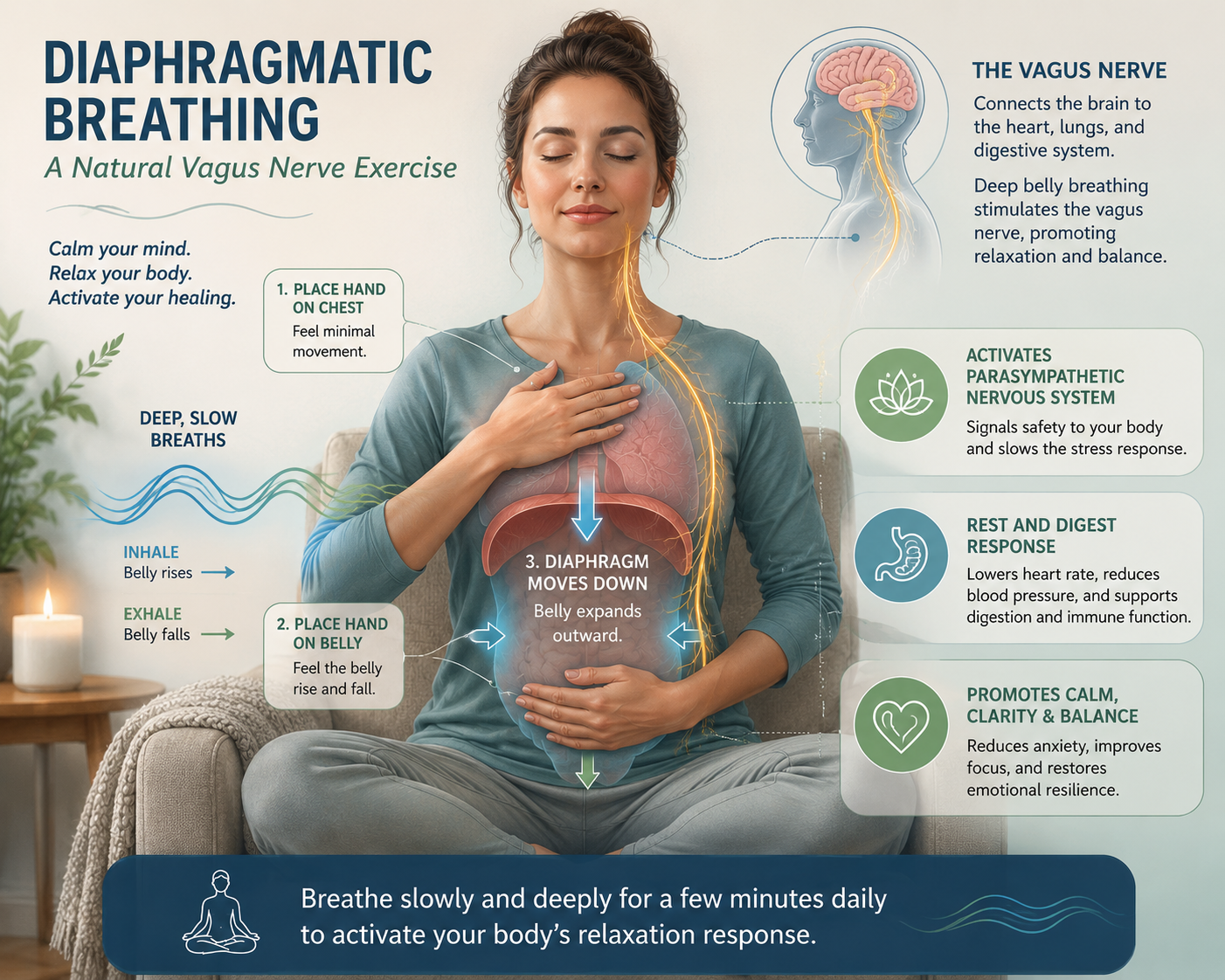
Figure: Focused diaphragmatic breathing – a natural vagus nerve exercise. Placing one hand on the belly (as shown) helps ensure you’re breathing deeply. Doing slow, full breaths for a few minutes each day can activate your parasympathetic (“rest and digest”) system[13].
- Build a daily “baseline routine”: Your body craves consistency more than you realize. Go to bed and wake up at the same times, even on weekends, to stabilize your circadian rhythm. Include a morning routine that cues safety (a few minutes of light stretching, a gentle walk, or meditation) rather than immediately diving into email. Evening rituals (like dimming lights, no screens for 30 min before bed, warm bath or calm reading) can signal to your brain it’s time to unwind. These simple anchor points ground your nervous system.
- Move in a calm way: You don’t need high-intensity workouts when recovering. Gentle exercise like yoga, tai chi or a slow jog can actually downregulate stress. A 2020 review found that mindfulness-type movement (including yoga) improved perceived stress and HRV in many studies[14]. The key is to breathe with the movement – think “yoga for stress” rather than “HIIT to burnout”. Even daily walks, especially in nature, can lower cortisol levels and restore focus.
- Optimize sleep hygiene: Good sleep is non-negotiable for recovery. Keep your bedroom cool, dark, and quiet. Avoid caffeine or heavy meals 5–6 hours before bed. If your mind races at night, try writing down tomorrow’s tasks in a brief “worry notebook” before lights out, so your brain feels it can let go. If insomnia persists, consider a CBT-I (cognitive-behavioural therapy for insomnia) protocol – it’s more effective long-term than sleeping pills[15]. Even short naps (10–15 min) can help reset if nighttime sleep is broken, but beware caffeine after midday.
- Moderate caffeine & stimulants: We know you’re tempted to use coffee or energy drinks to “power through.” But excess caffeine floods adrenaline and cortisol even more. Try cutting back to one strong coffee in the morning, and switch to herbal or green tea afterwards. Pay attention to hidden sources of stimulants (some supplements, pre-workout powders, sodas). Notice if alcohol or sugar “temporarily relieves” stress but leads to worse anxiety later – replacing those with relaxing herbal teas or a short walk can break that vicious cycle.
- Support your gut and nutrition: A stressed gut needs TLC. Eat regular meals with protein, veggies and fibre (whole grains, legumes). Avoid heavy processed foods or sugar binges that cause blood sugar crashes and inflammation. Consider adding anti-inflammatory foods like turmeric, ginger, or omega-3-rich fish (salmon, walnuts). Probiotics or fermented foods (yogurt, sauerkraut) can soothe the gut-brain axis[12]. This isn’t about “dieting,” it’s about giving your brain the nutrients it needs to rebuild. Stay hydrated – even mild dehydration can worsen anxiety.
- Gentle supplements: Some adaptogens and nutrients may help, but use them cautiously. Ashwagandha, for example, has some evidence for reducing stress and cortisol in the short-term[16][17]. A typical dose is ~300–600 mg standardized extract per day. Other adaptogens like Rhodiola or Holy Basil have mixed research; always consult a professional if you’re on medication. A multi-vitamin or B-complex can help if your diet is inconsistent. Magnesium (e.g. glycinate or citrate form, 200-400 mg at night) often eases muscle tension and promotes sleep. But remember: supplements are adjuncts, not fixes. They won’t override a broken nervous system or poor habits. And watch out: even “natural” herbs can affect the liver or hormones[18]. If you try any herb, start low and short, and be aware of side effects.
- Mindfulness and mental reframing: Psychology matters. Chronic stress narrows your thinking to worst-case scenarios. In moments of anxiety, consciously practice grounding: focus on your breath, feel your feet on the floor, or say “I’m safe right now.” A short mindfulness meditation (even 5 minutes) can greatly interrupt an anxiety spiral. Evidence shows that brief breathing/meditation exercises can reduce acute stress and improve focus[19]. Try apps or guided exercises focused on relaxation. Journaling might help unload racing thoughts, or list three positives before bed to counter rumination.
- Set small daily goals: When you’re burned out, your “filter” is worn thin. You may feel overwhelmed by big tasks. Break your day into micro-steps. Celebrate even finishing a single work item or making a healthy meal. This rewires your brain towards seeing progress, not just problems.
- Define non-negotiables: Protect your recovery time. Block off short “self-care” slots in your calendar as firmly as you would a meeting (for breathing practice, walk, lunch away from desk, etc.). Unchecked, work will expand to fill all time. Remember: setting boundaries is not lazy – it’s vital.
These steps, applied consistently, help regulate the nervous system and slowly widen your window of tolerance[6][13]. They’re not instant fixes – think of recovery as plant growth, not firework bursts. But within weeks, you may notice small shifts: a bit more ease when traffic snarls, slightly deeper sleep, or a sense that you can handle one more urgent email.
Common Mistakes That Stall Recovery
Even with good intentions, people often stumble in similar ways. Avoid these traps:
- Mistake: “I just need more rest.” True rest is crucial, but if you’re already paradoxically wired, an extra day in bed can actually increase stress hormones (see Mayo: stress hormones stay high)[20]. Instead, focus on active relaxation (breathing, movement, meditation). Passive tiredness (just lying around) usually isn’t enough to reset an overactive system.
- Mistake: Only dealing with surface issues. For example, taking sleeping pills or anxiety meds without addressing the triggers will only cover up the problem. You might “sleep” more, but your baseline stress remains high. Similarly, only doing massage or ice baths as occasional treats helps a little, but without daily breathing or boundary-setting, the nervous system still runs hot.
- Mistake: Pushing harder after short breaks. Many high-achievers take a vacation and feel better… temporarily. But as soon as work ramps up again, the fatigue and anxiety return (vacation rebound). The Mayo Clinic warns that failing to cope after stressors only worsens health over time[21]. True recovery means integrating changes into daily life, not just escaping for a weekend.
- Mistake: Self-blame or perfectionism. Thinking “I should be coping better” only ramps up shame and cortisol. Chronic stress narrows perspective. Instead, recognize that burnout is a signal, not a moral failure. High performers often fall into the trap of believing they must always be “in control.” It’s OK to seek help and to adjust expectations.
- Mistake: Going it alone. It’s common to bottle stress in silence, especially for perfectionist types. But humans are social creatures – social support buffers stress[22][23]. Talk to trusted friends, mentors, or a therapist about what you’re experiencing. Join peer groups (virtual or local) for high-stress professions. You’ll realize you’re not the only one walking this tightrope. Connecting with others can actually lower cortisol and widen your emotional bandwidth.
- Mistake: Overuse of stimulants. In desperation to feel normal, some people double down on caffeine, energy pills, or alcohol at night to “take the edge off.” All of these send mixed signals to your nervous system. Caffeine keeps you wired; alcohol disrupts sleep quality; sugary snacks spike and crash blood sugar. Substitute healthy tools (like the breathing exercise above) when you feel tempted by quick fixes.
- Mistake: Focusing only on the mind. The idea that mental willpower alone can overcome physical burnout is flawed. If your biology is compromised (brain fog, tight muscles, gut issues), more cognitive effort will just exhaust you further[24]. Balance talk therapy or cognitive techniques with somatic (body-based) practices. For example, instead of only talking about feeling anxious, also use your body (breathing, yoga, polyvagal exercises) to feel safer.
By sidestepping these errors, you create a clearer path to true recovery. In essence, you shift from “managing” stress as an external enemy to healing your internal systems from the cellular level up[25].
A Deeper Solution: The Calm Rebuild™ Program
Sometimes, self-help isn’t enough. For many high-functioning professionals, the change must happen at both the identity and nervous system level. That’s where structured support like The Calm Rebuild™ comes in. This 12-week somatic approach treats chronic stress as a physical, neurological issue – not just a mindset problem. As OOverall Health explains, The Calm Rebuild is “a clinical-grade partnership designed to restore nervous system stability and executive capacity”[26]. It’s not about piling more tools on an already cracked foundation; it’s about repairing your “biological hardware,” so your performance can run without overload[24].
In practice, such programs (and the strategies above) involve mapping your stress “baseline,” using vagus nerve and breathwork exercises, and even addressing circadian and gut-brain health in tandem[27]. They gradually rebuild your brain’s decision-making power and emotional stability, phase by phase. The goal is to move you out of functional dissociation and into a wide, resilient “window of tolerance” again[26].
Whether you seek a program like this or forge a custom plan with a coach/therapist, the key is a deep, systemic approach. You might not have tried something like a weekly nervous-system calibration or identity-shifting session – but these are the steps many burnt-out leaders find transformative. Consider reaching out for guided support once you’ve put some of the basics into practice.
Conclusion: Reclaiming Your Capacity
You didn’t lose your capacity because there’s something wrong with you. High performers built their careers on resilience, pushing through exhaustion and doubt. It’s natural to try the same toughness now. But in the long run, relentless pushing is your vulnerability, not your strength[28][24]. Chronic stress does shrink your capacity – that’s just biology, not destiny. The good news is: capacity can grow again.
Begin by acknowledging how far you’ve already pushed yourself – you’re over-trained, not broken. Then, apply the practical tools above consistently. Monitor your progress: maybe your anxiety diminishes from an 8/10 to 6/10, or your digestion normalizes, or you make it through a day without a meltdown. These small wins are proof that healing is happening.
In the end, building a trusted recovery routine is critical. As the Mayo Clinic lists, simple healthy habits (balanced diet, exercise, sufficient sleep, relaxation techniques and social support) have an enormous cumulative impact[29]. Combine those with nervous-system hacks (breathing, vagus stimulation) and gentle mental habits (mindfulness, gratitude) to truly reverse the shrinkage.
And remember: you’re not alone. Many high-stakes professionals face this. With the right approach, your capacity can expand again – often to a level beyond what you thought possible. The goal is “high-capacity leadership,” not burnout compliance[30]. Your experience of stress and burnout is valid and serious. But it is also treatable with time, consistency, and the right strategies. By addressing both mind and body, you can heal your nervous system, reclaim your mental sharpness and emotional balance, and find joy in your work and life once more.
You’re not broken – you’re responding to too much. With focused rebuilding of your biological foundation, your performance will become sustainable again, and the burned-out version of you will be in the past.
Resources
Reputable medical and neuroscience sources were used throughout, including the Cleveland Clinic and Mayo Clinic for stress effects, recent neuroscience reviews on chronic stress[3], NIH evidence on adaptogens, and clinical content on allostatic load[2]. The Calm Rebuild™ program details are drawn from the ooverallhealth.com description of their 12-week approach[30][24]. All advice is evidence-informed and aligned with holistic stress management principles.