

The Complete Guide to Burnout Recovery: How to Rebuild Energy, Calm Your Nervous System, and Restore Your Life
Burnout can look surprisingly functional from the outside.
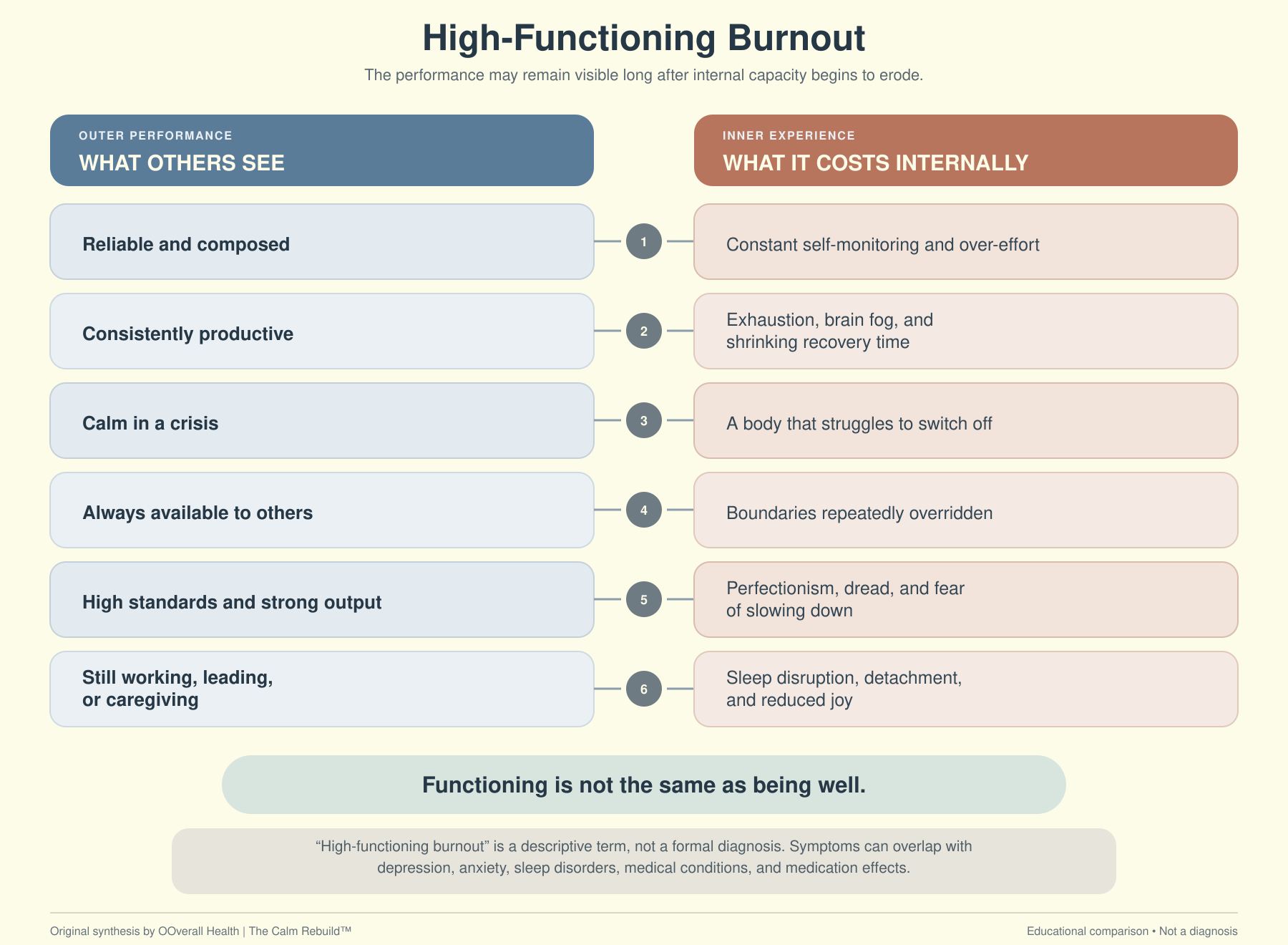

You may still attend meetings, meet deadlines, care for your family, answer messages, and solve other people’s problems. Yet each task costs more than it used to. Your sleep no longer restores you. Small decisions feel heavy. You need more caffeine to start the day and more distance from people by evening. You may be productive, but you no longer feel fully present in your own life.
This is one reason burnout is often missed. People expect collapse. In reality, many adults compensate for months or years before their performance visibly changes. They work longer, lower their standards in hidden areas, withdraw socially, postpone medical appointments, or use weekends only to recover enough to begin again.
Burnout is not laziness, weak character, or a simple failure to think positively. It is also not automatically a “nervous system breakdown,” adrenal failure, or proof that one hormone has stopped working. The World Health Organization defines burnout as an occupational phenomenon resulting from chronic workplace stress that has not been successfully managed. It involves three dimensions: exhaustion, increased mental distance or cynicism toward work, and reduced professional efficacy.[1]
That definition matters. It keeps the focus on the relationship between a person and the conditions in which they are expected to function. It also prevents every form of fatigue, depression, trauma, parenting strain, or caregiver exhaustion from being inaccurately labelled as occupational burnout.
At the same time, the lived experience of depletion is not confined to paid employment. Parents, unpaid caregivers, students, entrepreneurs, volunteers, and people managing chronic illness can experience severe role-related exhaustion. Throughout this guide, the term burnout follows the WHO occupational definition. When discussing caregiving, parenting, or other roles, we will name the specific form of chronic overload rather than assume it is medically identical.
This guide is for professionals, executives, healthcare workers, parents, caregivers, and general adults who are asking:
- Why am I exhausted even after resting?
- Why can I still perform but no longer feel like myself?
- How do I know whether this is burnout, depression, anxiety, a sleep problem, or a medical condition?
- Can I recover without leaving my career?
- What should I change first?
- How do I rebuild without turning recovery into another performance project?
You will learn what burnout is, what it is not, how chronic stress can affect sleep, attention, emotion, and physical functioning, and how to build a practical recovery plan. You will also learn where the evidence is strong, where it is still developing, and when professional help is important.
| Start with recognition: If you have been normalizing exhaustion, detachment, or reduced capacity, OOverall Health’s Executive Red-Zone Early-Warning Checklist to identify the areas that need attention first. |
What Burnout Is—and What It Is Not
Burnout is a work-related pattern, not a formal medical diagnosis. The WHO includes it in the International Classification of Diseases as an occupational phenomenon, not a medical condition.[1] This does not mean the distress is imaginary or unimportant. It means clinicians must consider other explanations rather than diagnosing burnout from a symptom list alone.
The three defining dimensions are:
- Exhaustion: Persistent emotional, cognitive, or physical depletion associated with work.
- Mental distance, negativism, or cynicism: Feeling detached from the work, the people served, colleagues, or the meaning the role once held.
- Reduced professional efficacy: Feeling less capable, effective, creative, or confident—even when objective performance has not yet collapsed.
Burnout overlaps with stress, depression, anxiety, insomnia, grief, trauma responses, attention problems, and medical causes of fatigue. The overlap is clinically important because similar symptoms may require different care.
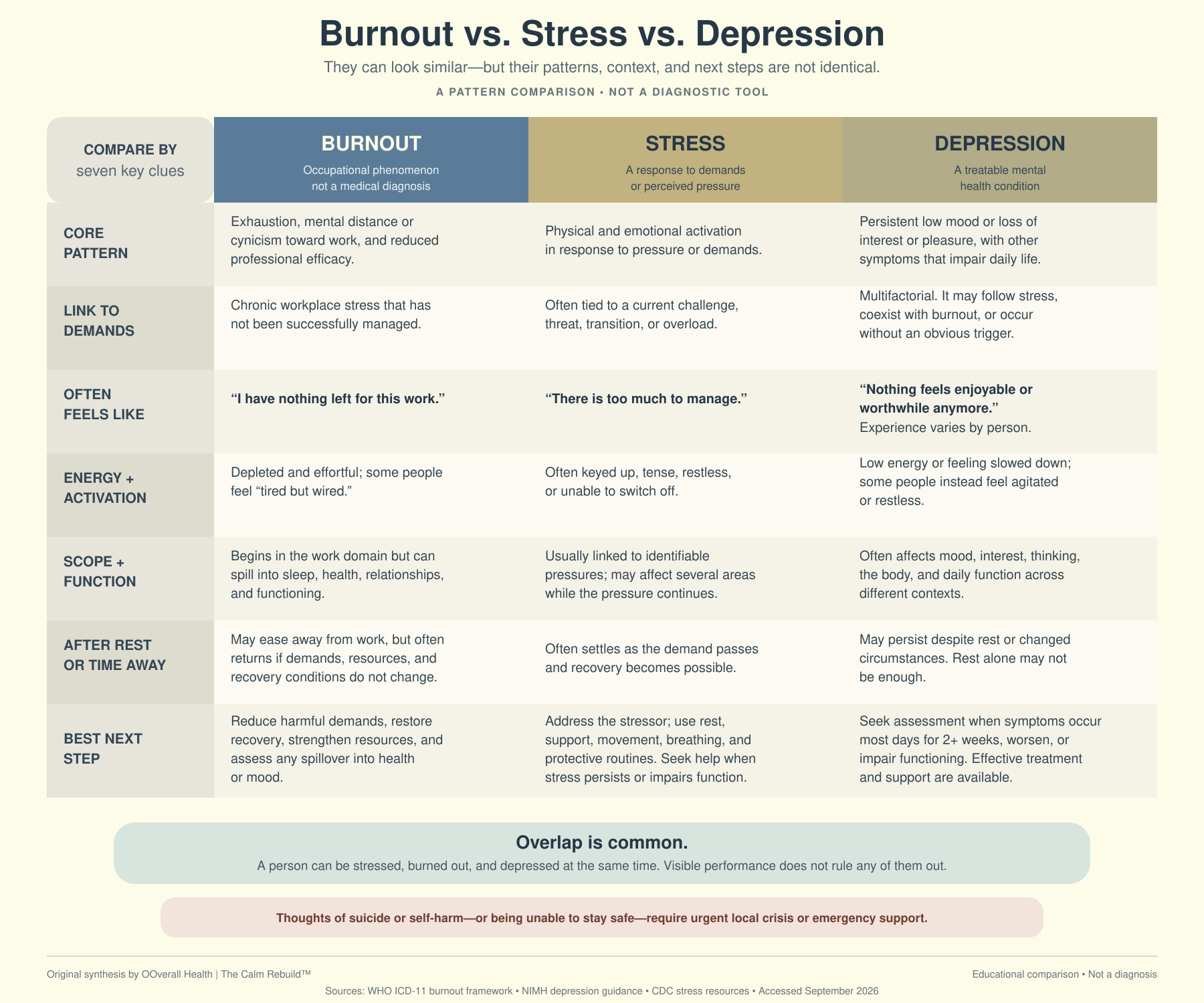

Burnout versus ordinary stress
Stress often feels like too much: too many demands, too little time, too much activation. Burnout often adds a sense of not enough: not enough energy, patience, meaning, control, or capacity.
Stress may improve after a weekend, a resolved deadline, or a short break. Burnout tends to persist because the demand–recovery imbalance remains. If the workload, conflict, moral distress, schedule, role ambiguity, or lack of control does not change, rest may offer temporary relief without creating durable recovery.
For a detailed comparison, see Burnout vs. Stress: What High Performers Get Wrong.
Burnout versus depression
Burnout and depression can both involve fatigue, low motivation, reduced concentration, sleep changes, hopelessness, and withdrawal. Depression tends to be more pervasive across settings, while burnout is conceptually tied to work. However, the distinction is not always clear, and the two can occur together.[2]
Seek a professional assessment if low mood, loss of pleasure, worthlessness, hopelessness, self-harm thoughts, or major changes in daily function extend beyond work. Do not assume that every depressive symptom will disappear through a vacation or workplace boundary.
Burnout versus anxiety
Anxiety often includes excessive worry, apprehension, muscle tension, avoidance, irritability, or physical arousal. A burned-out person may also feel anxious—especially when depleted capacity makes ordinary demands feel threatening. Some people alternate between overactivation and shutdown: racing thoughts at night, then fog and exhaustion during the day.
This pattern can be distressing, but it does not prove that the autonomic nervous system is permanently “stuck.” Burnout-specific research on cortisol, the hypothalamic–pituitary–adrenal axis, and autonomic function has produced inconsistent findings.[3]
Burnout versus a medical problem
Fatigue, poor concentration, sleep disruption, pain, headaches, palpitations, and digestive changes can occur during prolonged stress. They can also occur with anemia, thyroid disorders, sleep apnea, diabetes, infections, inflammatory conditions, medication effects, nutritional deficiencies, perimenopause, substance use, and many other conditions.
Persistent or worsening symptoms deserve medical assessment. “It is probably just stress” should never replace appropriate evaluation.
The Science of Burnout: A Simple Overview
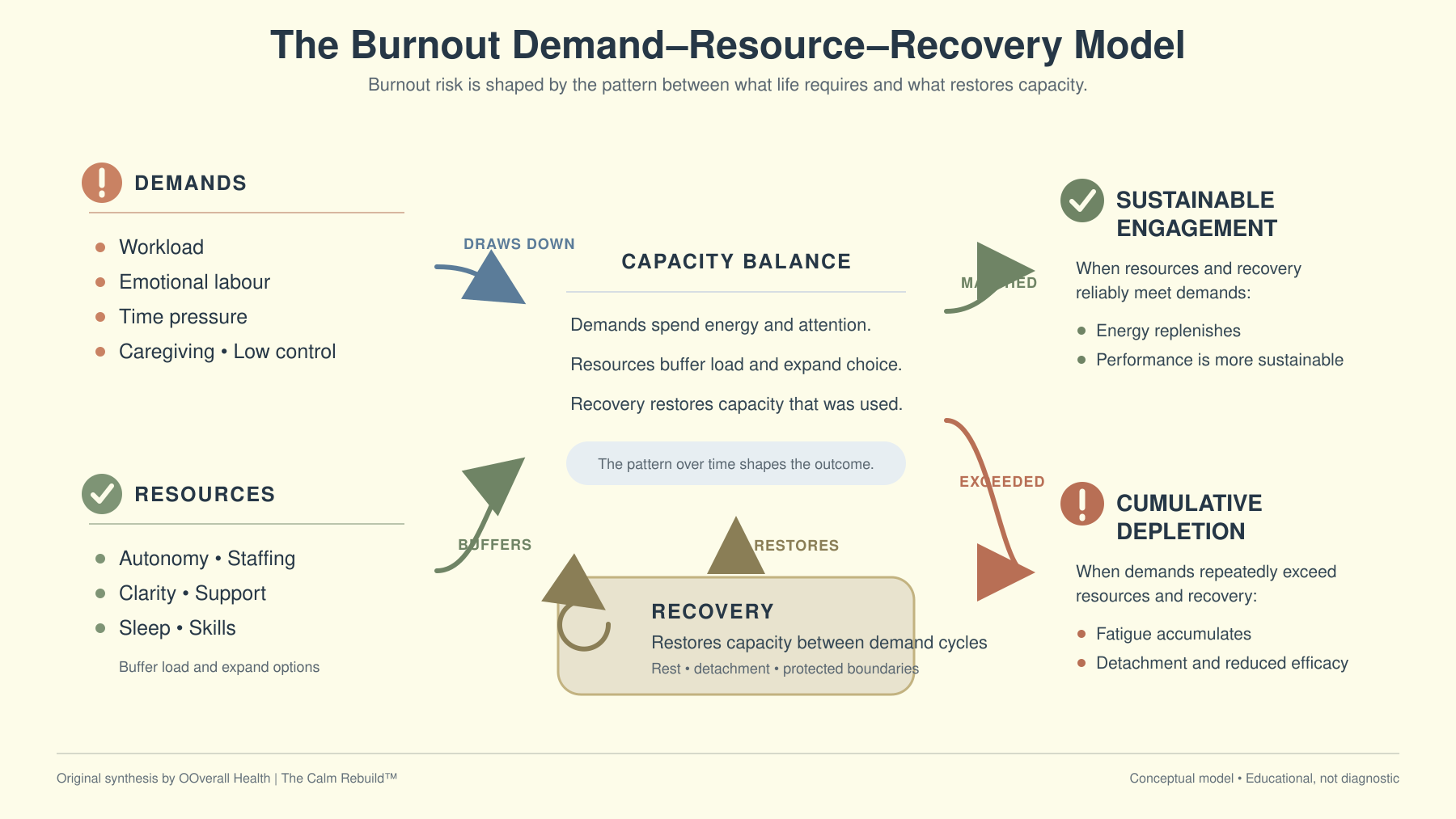

Burnout develops when demands repeatedly exceed the resources available to meet them and recover. Those resources include time, sleep, autonomy, staffing, skills, social support, psychological safety, physical health, meaning, and predictable opportunities to rest.
One useful way to understand burnout is the job demands–resources model:
- Demands require sustained effort: workload, time pressure, emotional labour, shift work, conflict, understaffing, caregiving after work, constant digital availability, or responsibility without authority.
- Resources help meet those demands: control, role clarity, fair compensation, supportive leadership, adequate staffing, feedback, flexibility, equipment, recovery time, and meaningful work.
High demand is not automatically harmful. Many people thrive during intense but time-limited periods when the purpose is clear, support is strong, control is reasonable, and recovery follows. Problems develop when demands are chronic, resources are insufficient, and the person cannot complete the stress cycle or change the conditions.
Stress is adaptive—until recovery becomes inadequate
The stress response helps mobilize energy and attention. Your brain and body prioritize immediate demands: heart rate may rise, muscles prepare for action, alertness increases, and less urgent functions temporarily receive fewer resources.
That response is useful during an emergency, a presentation, or a difficult clinical situation. The problem is not that stress exists. The problem is repeated activation without enough restoration, predictability, control, or safety.
Chronic psychosocial stress can influence brain networks involved in attention, decision-making, mood, threat detection, and self-regulation. It also interacts with endocrine, autonomic, immune, and metabolic processes.[4] These effects are complex and vary between people. They do not justify claims that burnout universally “shrinks the brain,” switches off the prefrontal cortex, or creates one measurable cortisol pattern.
Allostatic load: the cost of repeated adaptation
Allostasis is the body’s process of maintaining stability by adapting to changing demands. Allostatic load describes the cumulative wear associated with repeated or poorly regulated adaptation.
Think of it as the cost of constantly adjusting. If you repeatedly borrow from sleep, suppress hunger, ignore pain, stay available after hours, and use urgency to maintain performance, the immediate tasks may get done. But the system has fewer opportunities to repair, learn, connect, and recover.
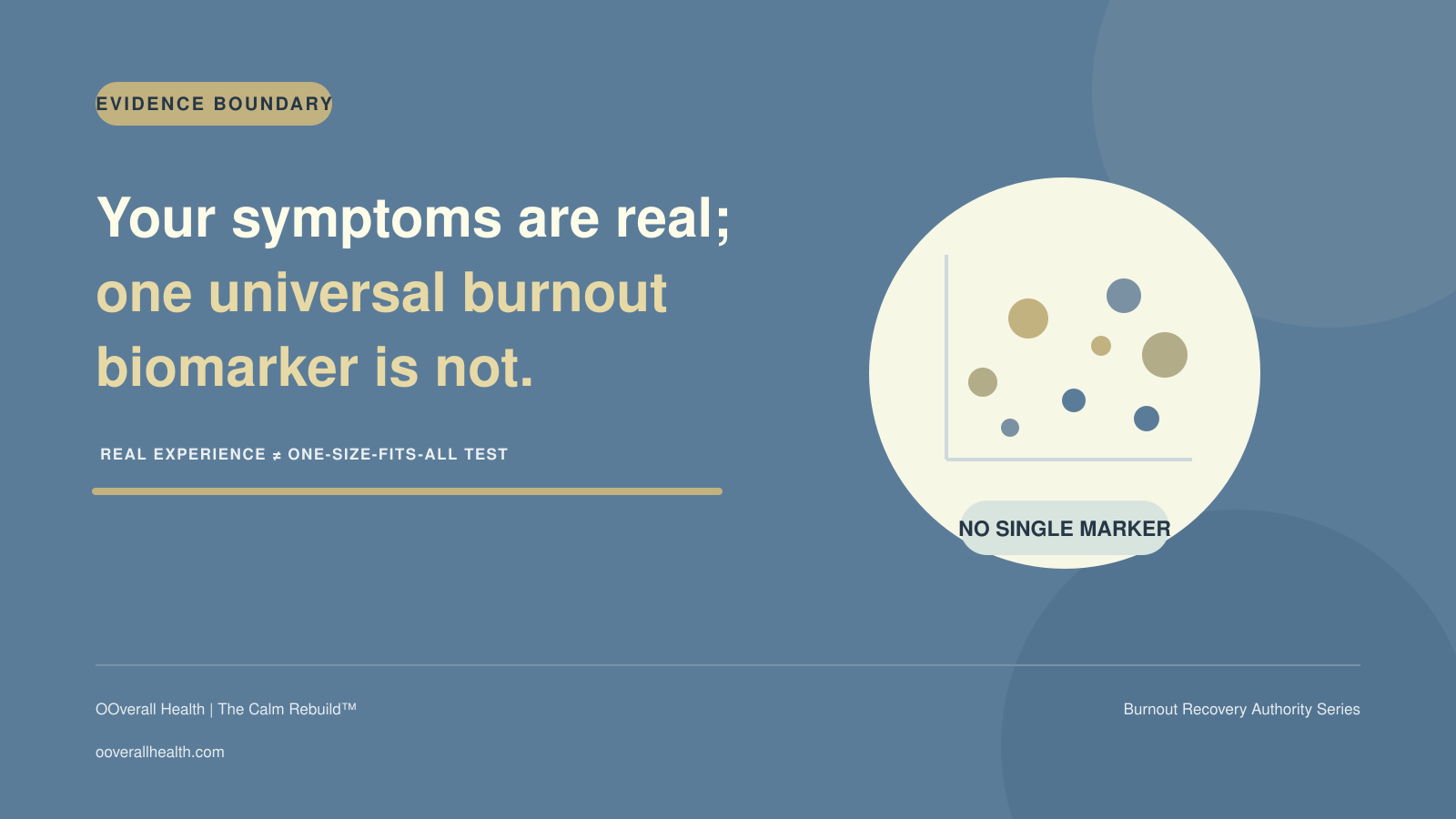
Allostatic load is a valuable scientific framework. It is not a home diagnosis and cannot be reduced to one commercial test.
Why cognition changes
Burnout is associated with subjective and measurable difficulties in attention, memory, executive function, and processing.[5] In everyday life, this may look like:
- rereading the same email;
- forgetting names or appointments;
- struggling to prioritize;
- feeling overwhelmed by minor decisions;
- losing creativity;
- making more errors when interrupted;
- needing longer to switch between tasks.
These experiences do not automatically mean permanent cognitive damage. Sleep loss, anxiety, depression, medication effects, medical illness, pain, and excessive multitasking can all impair cognition. Proper assessment matters.
Why sleep becomes “tired but wired”
Burnout and poor sleep often reinforce each other. Pressure, rumination, shift work, late-night screens, caffeine, alcohol, irregular schedules, and anticipatory worry can make it harder to fall asleep or stay asleep. Poor sleep then reduces emotional regulation, attention, pain tolerance, and coping capacity.
Adults generally need at least seven hours of sleep, although individual needs vary.[6] If you wake with your mind racing or feel exhausted but unable to downshift, see Why You Feel Tired but Wired All the Time.
Why emotions change
Emotional exhaustion can narrow your range. You may become irritable, numb, tearful, cynical, impatient, or unusually sensitive to small demands. Detachment may function as short-term protection: when caring becomes too costly, the mind creates distance.
This is especially common in healthcare, education, leadership, social services, parenting, and caregiving—roles that require emotional presence while offering limited control over the conditions.
Why physical symptoms can appear
Stress can influence muscle tension, headaches, sleep, appetite, digestion, pain perception, heart rate, and health behaviours. Burnout is associated with physical and mental health concerns, but association does not prove that burnout directly causes every symptom.
Physical symptoms should be investigated, not romanticized as evidence that the body is “forcing” a spiritual transformation or “detoxing” stress.
Root Causes: Burnout Is Rarely About One Bad Habit
Burnout usually emerges from an interaction between work conditions, role demands, personal patterns, health, and life context.
1. Workload that routinely exceeds capacity
Workload includes more than the number of tasks. It includes complexity, emotional weight, interruption, time pressure, responsibility, decision volume, and how much recovery the work requires.
A healthcare worker may complete the scheduled shift but spend the evening replaying clinical decisions. An executive may attend eight hours of meetings and then need three more hours for the work those meetings prevented. A parent may finish paid work only to begin the second shift of caregiving.
2. Low control
Heavy demand is harder to tolerate when you have little influence over schedule, priorities, methods, staffing, or pace. Evidence linking high demands and low decision latitude with poorer mental health has been consistent across work-stress research.[7]
3. Insufficient reward or recognition
Reward includes pay, advancement, respect, fairness, feedback, and the knowledge that effort leads to a meaningful result. Repeated effort without recognition can create exhaustion and cynicism.
4. Community breakdown
Conflict, isolation, bullying, discrimination, weak leadership, and lack of psychological safety increase strain. Supportive relationships do not erase structural problems, but isolation makes them harder to manage.
5. Unfairness
Inconsistent rules, discrimination, favouritism, unequal workload, opaque decisions, or lack of procedural fairness can create moral and emotional injury.
6. Values conflict and moral distress
Burnout risk rises when people must repeatedly act against their professional values or cannot provide the quality of care, leadership, teaching, or service they believe is necessary.
For example, a nurse may know what a patient requires but lack staffing. A manager may be told to promote well-being while being measured only on output. A therapist may face productivity targets that reduce time for ethical care.
7. Role ambiguity and impossible expectations
You cannot succeed at a role whose expectations are unclear, contradictory, or constantly changing. High performers often compensate by overpreparing, staying available, and absorbing work that should be clarified or redistributed.
8. Perfectionism and over-responsibility
Perfectionism does not cause all burnout. However, patterns such as difficulty delegating, fear of disappointing others, tying self-worth to productivity, and believing “I should be able to handle this” can keep a person in harmful conditions longer.
These patterns deserve compassion. They may have been rewarded for years and may once have supported safety, belonging, or achievement.
9. Caregiving and invisible labour
Paid work does not occur in a vacuum. Parenting, elder care, disability-related care, household coordination, emotional labour, financial pressure, and relationship strain all consume capacity. Recovery advice that ignores these realities can feel blaming and impractical.
10. Sleep and circadian disruption
Night shifts, rotating shifts, on-call work, early starts, late-night work, and irregular routines can disrupt sleep opportunity. Timely breaks appear helpful for fatigue and alertness, while quick returns between shifts may worsen fatigue.[8]
11. Chronic health conditions and neurodivergence
Pain, hormonal transitions, chronic illness, ADHD, autism, sensory overload, and medication effects can change how much energy a role requires. The goal is not to pathologize difference; it is to design realistic supports and reduce preventable friction.
12. Trauma exposure
People working in emergency care, public safety, social services, journalism, law, crisis response, or caregiving may be exposed to distressing events. Burnout and trauma are not interchangeable. A person may have burnout, post-traumatic stress, moral injury, compassion fatigue, or several overlapping concerns. Trauma symptoms require appropriate assessment.
Risk Factors: Who Is More Vulnerable?
Anyone can experience burnout, but risk increases when several factors combine:
- chronic high workload or understaffing;
- long hours, night work, rotating shifts, or inadequate breaks;
- high responsibility with low authority;
- emotional labour or repeated exposure to suffering;
- workplace conflict, bullying, discrimination, or low psychological safety;
- unclear roles or changing expectations;
- low reward, unfairness, or values conflict;
- job insecurity or financial pressure;
- isolation or weak support;
- caregiving responsibilities outside work;
- perfectionism, people-pleasing, or over-identification with achievement;
- inadequate sleep or untreated insomnia;
- chronic illness, pain, hormonal changes, or nutritional deficiency;
- anxiety, depression, ADHD, trauma, grief, or substance use;
- lack of access to healthcare, respite, safe housing, childcare, or accommodations.
Burnout is not proof that a person lacks resilience. In some settings, high resilience allows a person to tolerate unsustainable conditions longer.
Signs and Symptoms of Burnout
Burnout is better understood as a pattern across several domains than as one symptom.
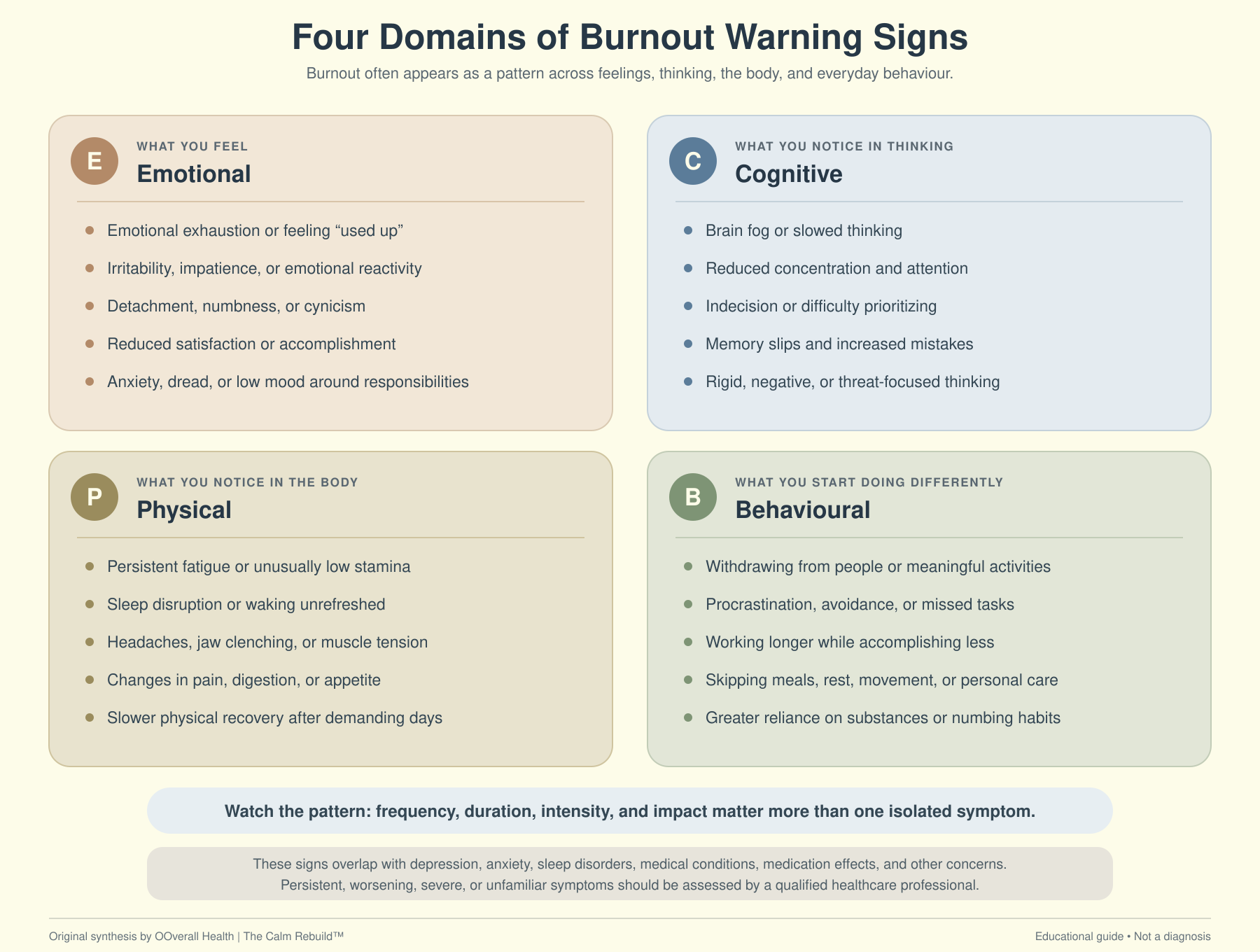
Emotional signs
- feeling emotionally drained;
- irritability, impatience, or a shorter temper;
- dread before work;
- numbness or reduced empathy;
- cynicism or loss of meaning;
- guilt about not caring as much as before;
- feeling trapped, powerless, or ineffective;
- increased anxiety or tearfulness.
Cognitive signs
- brain fog;
- forgetfulness;
- difficulty prioritizing;
- slow decisions;
- reduced creativity;
- trouble concentrating;
- more errors or near-misses;
- inability to mentally leave work;
- repetitive worry or rumination.
Physical signs
- fatigue that rest does not fully relieve;
- sleep onset or maintenance problems;
- headaches;
- muscle tension or jaw clenching;
- changes in appetite;
- digestive discomfort;
- increased pain;
- feeling “tired but wired”;
- reduced exercise tolerance;
- more frequent use of caffeine, alcohol, food, or substances to regulate energy or emotion.
Behavioural signs
- working longer to produce the same result;
- procrastination or avoidance;
- withdrawing from colleagues, friends, or family;
- skipping meals, movement, appointments, or medication;
- checking messages compulsively;
- losing patience with clients, patients, employees, or children;
- presenteeism, being at work but functioning below usual capacity;
- using weekends only for recovery;
- fantasizing about quitting without having the energy to plan.
High-functioning burnout signs
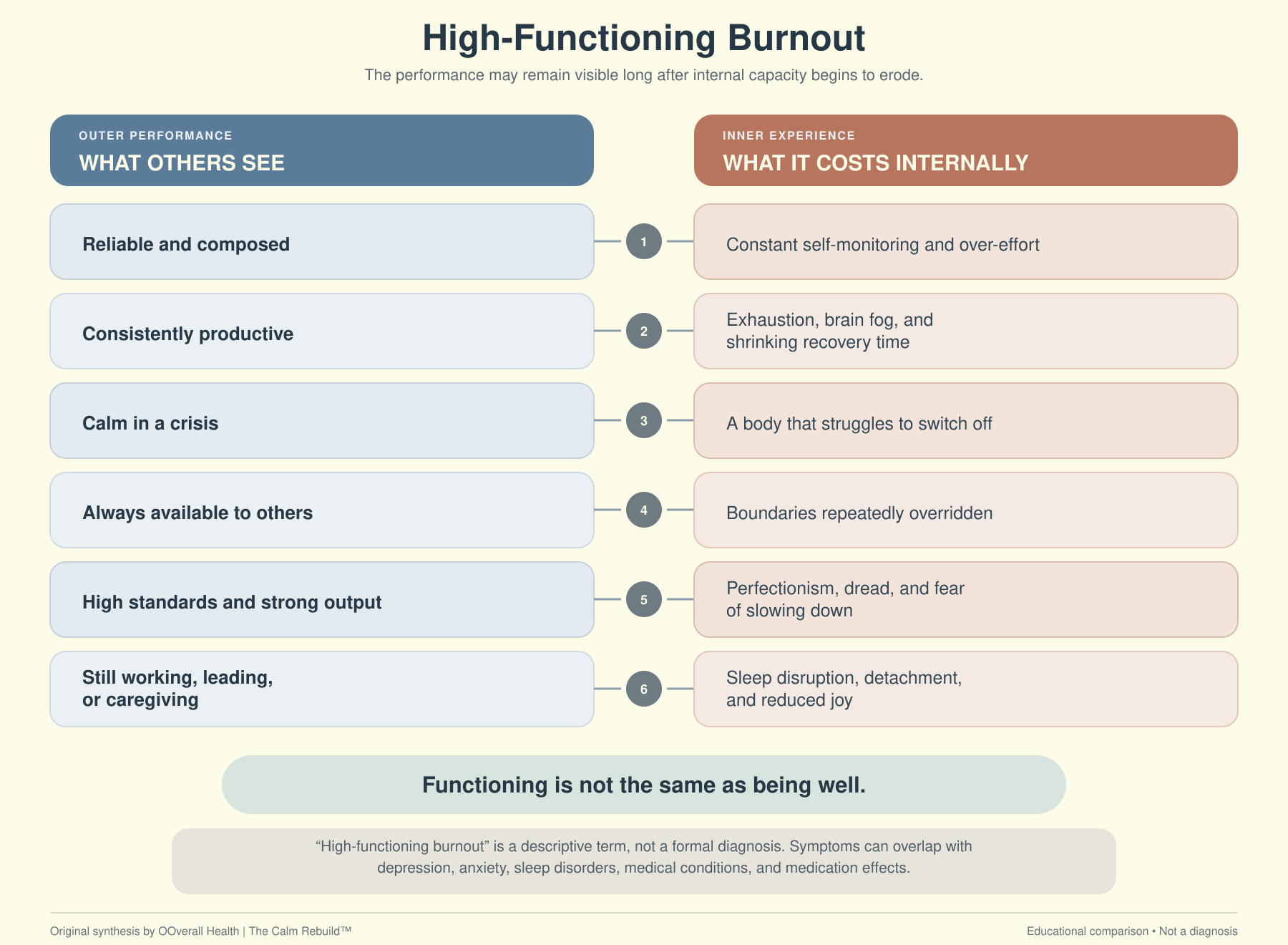
High-functioning burnout is not a formal diagnosis. It describes a practical pattern in which outward performance remains intact while internal capacity deteriorates.
You may still be praised for reliability while privately experiencing insomnia, numbness, reduced attention, resentment, or physical depletion. Learn more in The Signs of High-Functioning Burnout.
Self-Assessment: Is Burnout a Reasonable Explanation?
A self-assessment can organize your thinking, but it cannot diagnose you.
Ask yourself:
- Has work-related exhaustion persisted for several weeks or longer?
- Do I feel increasingly detached, cynical, or emotionally distant from my work?
- Do I feel less effective, creative, or capable than I used to?
- Does rest help only briefly because the same demands return?
- Has my sleep, concentration, patience, or physical functioning changed?
- Am I using more caffeine, alcohol, food, scrolling, work, or avoidance to cope?
- Have people close to me noticed that I am less present or more irritable?
- Are workload, control, fairness, reward, support, or values problems driving the pattern?
- Do symptoms extend across every part of life, not only work?
- Could a medical condition, medication, sleep disorder, depression, anxiety, trauma, grief, or substance use be contributing?
Assess function, not only symptoms
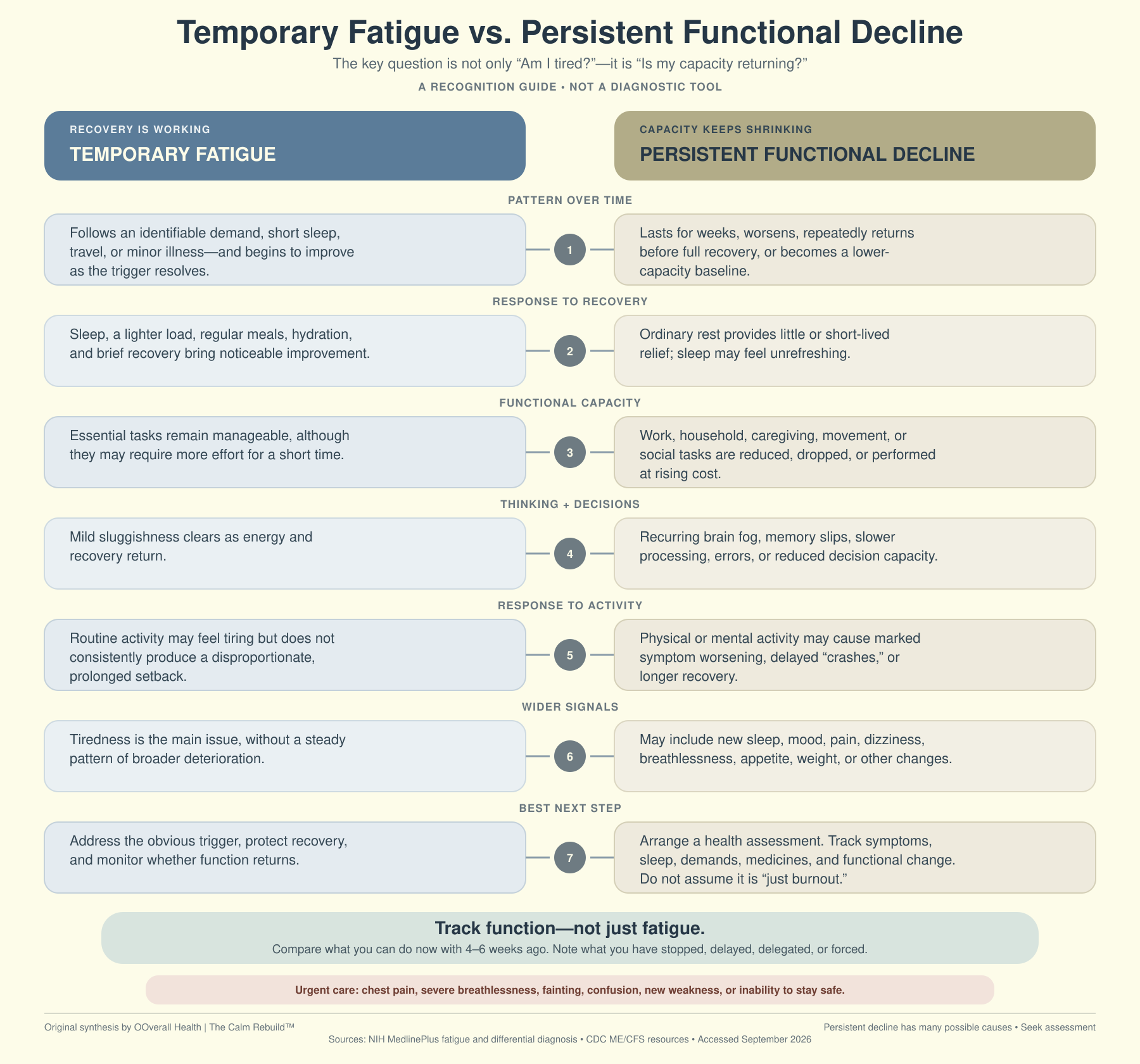
Rate your current capacity from 0 to 10 in each domain:
- physical energy;
- sleep quality;
- attention and decision-making;
- emotional range;
- patience and relationships;
- ability to recover after stress;
- work performance;
- sense of meaning;
- ability to set limits;
- hope that change is possible.
Then identify the two domains with the greatest decline. Those become your first recovery targets.
Use validated tools carefully
The Maslach Burnout Inventory is widely used but licensed; it should not be copied or reproduced without permission.[9] The Burnout Assessment Tool is a research-based option available under specified use terms.[10] Any result should be interpreted as screening information, not a medical diagnosis.
| Get a clearer starting point: Complete the Burnout and Capacity Check-In to map exhaustion, cognitive load, sleep, emotional distance, work conditions, and support needs. |
Evidence-Informed Burnout Recovery
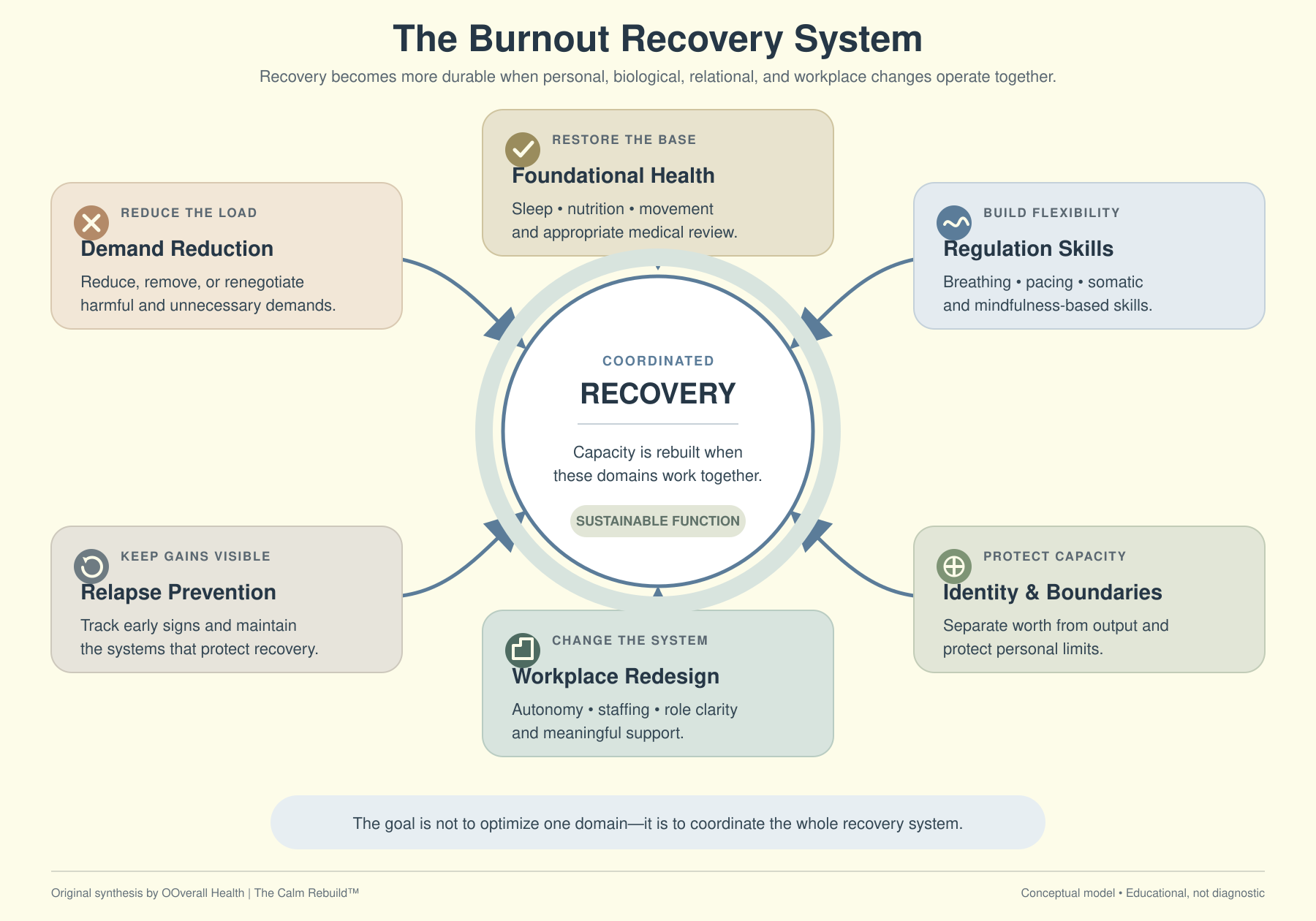
Burnout recovery is not one technique. It is a coordinated process of reducing harmful demand, restoring capacity, treating overlapping conditions, and changing the patterns and systems that would otherwise recreate the problem.
Step 1: Stabilize before you optimize
When capacity is low, ambitious recovery plans can become another demand. Begin with the smallest changes that protect safety and basic function.
For the next seven days:
- identify what is urgent, what can wait, and what can stop;
- reduce nonessential decisions;
- ask for one concrete form of help;
- protect a consistent sleep opportunity;
- eat regularly enough to avoid extreme energy swings;
- take brief movement and sensory breaks;
- postpone major optional commitments;
- arrange healthcare support for concerning symptoms.
The goal is not peak performance. It is to stop the ongoing loss of capacity.
Step 2: Reduce or redesign the demands
Self-care cannot compensate for relentless workload, harassment, unsafe staffing, moral distress, or a schedule that prevents sleep.
Possible changes include:
- clarify the three highest-priority responsibilities;
- renegotiate deadlines or scope;
- document workload and risk;
- reduce meetings or unnecessary reporting;
- block uninterrupted work periods;
- use vacation, sick leave, disability support, or accommodations when appropriate;
- ask for staffing, equipment, training, or supervision;
- establish communication hours;
- redistribute household and caregiving labour;
- consult human resources, a union, occupational health, or legal support when needed.
If leaving your role is not realistic, recovery may still be possible through staged workload reduction, boundaries, accommodations, and support. See How to Recover From Burnout Without Quitting Your Career.
Step 3: Rebuild sleep
Sleep is not a reward for finishing everything. It is a biological requirement that supports attention, memory, mood, metabolism, immune function, and safety.
Start with:
- a consistent wake time most days;
- enough scheduled time for at least seven hours of sleep;
- morning daylight when possible;
- reduced caffeine in the afternoon and evening;
- a lower-stimulation transition before bed;
- a written “tomorrow list” to reduce cognitive rehearsal;
- a dark, cool, quiet sleep environment;
- reduced alcohol as a sleep aid;
- medical evaluation for loud snoring, gasping, restless legs, severe daytime sleepiness, or persistent insomnia.
Sleep hygiene is helpful, but chronic insomnia often needs more than tips. Cognitive behavioural therapy for insomnia is considered a first-line treatment and targets the thoughts and behaviours that perpetuate insomnia.[11]
Step 4: Restore nutrition without turning food into a cure
There is no proven “burnout diet.” Food cannot correct understaffing, bullying, moral distress, or an impossible workload. Nutrition can, however, support energy, mood, sleep, and general health.
Prioritize:
- regular meals or snacks if stress has disrupted appetite;
- adequate protein across the day;
- fibre-rich carbohydrates rather than relying only on sugar or caffeine;
- vegetables and fruit;
- legumes, nuts, seeds, whole grains, and healthy fats;
- adequate hydration;
- culturally familiar foods you can sustain;
- reduced dependence on alcohol or highly caffeinated drinks for regulation.
Mediterranean-style and other nutrient-dense dietary patterns are associated with favourable mental-health outcomes, but burnout-specific nutrition trials are limited.[12] Claims that supplements “reset cortisol,” cure adrenal fatigue, or repair burnout at a cellular level exceed current evidence.
Ask a qualified clinician about testing when symptoms suggest anemia, thyroid problems, diabetes, vitamin B12 deficiency, iron deficiency, vitamin D deficiency, or another medical concern. Avoid indiscriminate testing and large supplement stacks.
Step 5: Use movement as medicine—not punishment
Movement can support mood, sleep, cognition, cardiovascular health, and stress regulation. CDC guidance recommends working toward at least 150 minutes of moderate-intensity activity weekly plus muscle-strengthening activity on two days, but any plan should match current health and capacity.[13]
During significant burnout, begin below your maximum:
- five to ten minutes of walking;
- gentle mobility after long periods of sitting;
- light strength work;
- yoga, tai chi, swimming, or cycling at a tolerable intensity;
- brief outdoor movement;
- one or two minutes of movement between tasks.
Exercise therapy has shown potential to reduce burnout symptoms, but the evidence base is limited and does not establish one ideal dose.[14] If exercise leaves you depleted for the rest of the day, reduce intensity, duration, or frequency and seek medical guidance when needed.
Step 6: Practise breathing without forcing calm
Slow breathing can influence heart rate and heart-rate variability and may reduce perceived stress.[15] It is a regulation practice, not proof that the vagus nerve is damaged or that burnout has been cured.
Try this for one to three minutes:
- Sit, stand, or lie in a supported position.
- Let the exhale become slightly longer than the inhale.
- Keep the breath comfortable and quiet.
- Stop if you feel dizzy, numb, trapped, panicked, or short of breath.
- Return to normal breathing and orient to the room.
Some people find breath focus activating, especially with panic, trauma, respiratory illness, or strong interoceptive sensitivity. Alternatives include looking around the room, feeling your feet, holding a textured object, humming, stretching, or walking.
Step 7: Use mindfulness as attention training
Mindfulness involves noticing present-moment experience with less automatic judgment. It can help create a pause between stress and reaction, reduce rumination, and increase awareness of limits.
Mindfulness-based interventions have shown reductions in stress and some dimensions of burnout, particularly among healthcare workers, although study quality and methods vary.[16]
Begin with thirty seconds:
- notice three things you can see;
- feel the support beneath your body;
- name the emotion without solving it;
- ask, “What is needed in the next ten minutes?”
Mindfulness should not be used to make people tolerate abuse or unsafe work.
Step 8: Add somatic practices carefully
Somatic practices use body sensation, movement, posture, touch, voice, and orientation to support awareness and regulation.
Examples include:
- grounding through the feet;
- slow head-and-eye orientation;
- gentle shaking or stretching;
- progressive muscle relaxation;
- walking while noticing rhythm;
- pushing the hands into a wall to sense strength and boundary;
- placing a hand on the chest or abdomen if touch feels supportive;
- tracking where tension increases and decreases.
The broader evidence for relaxation, yoga, mindfulness, and paced breathing is promising. Direct evidence that a specific somatic exercise treats occupational burnout remains limited. Present these practices as optional skills, not universal cures.
Step 9: Change behaviour at the point of demand
Burnout recovery depends on what happens during the workday, not only after it.
Useful behavioural changes include:
- pause before automatically saying yes;
- replace “I will handle it” with “Which priority should this replace?”;
- schedule recovery before the calendar fills;
- use templates and automation for repetitive work;
- group similar tasks;
- reduce notifications;
- delegate at the 80% standard rather than waiting for perfect;
- stop using urgency as the only way to begin;
- create a shutdown ritual at the end of work.
Step 10: Build boundaries that change workload
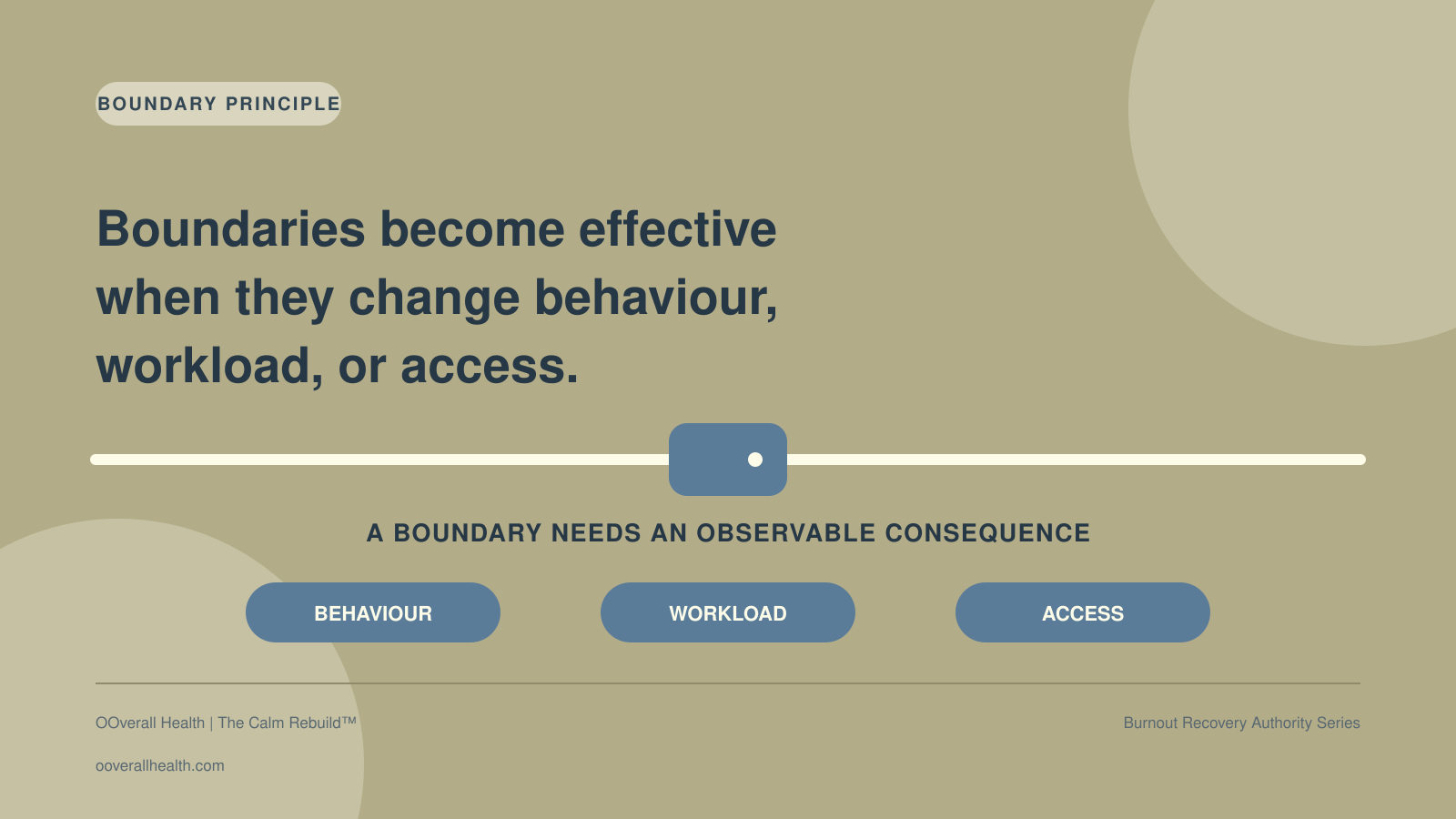
A boundary is not merely a statement. It is a limit followed by behaviour.
Examples:
- “I can complete A or B today. Which is the priority?”
- “I am unavailable after 6:00 p.m. I will respond tomorrow.”
- “I can join for the first 20 minutes.”
- “I need the request in writing with the deadline.”
- “I cannot take responsibility for this without additional time or support.”
Expect discomfort. If your identity has been built around reliability, boundaries may initially feel like failure. In reality, they make capacity visible.
Step 11: Use trauma-informed principles
Trauma-informed recovery emphasizes safety, choice, collaboration, trust, and empowerment.
Apply these principles by:
- offering options rather than commands;
- pacing change;
- explaining why a practice is being used;
- respecting cultural and personal meaning;
- avoiding forced eye closure, touch, breath control, or disclosure;
- allowing people to stop;
- distinguishing burnout from trauma;
- building support before confronting high-risk situations.
Step 12: Restore connection and meaning
Burnout often shrinks life to obligation. Recovery requires experiences that are not measured only by productivity.
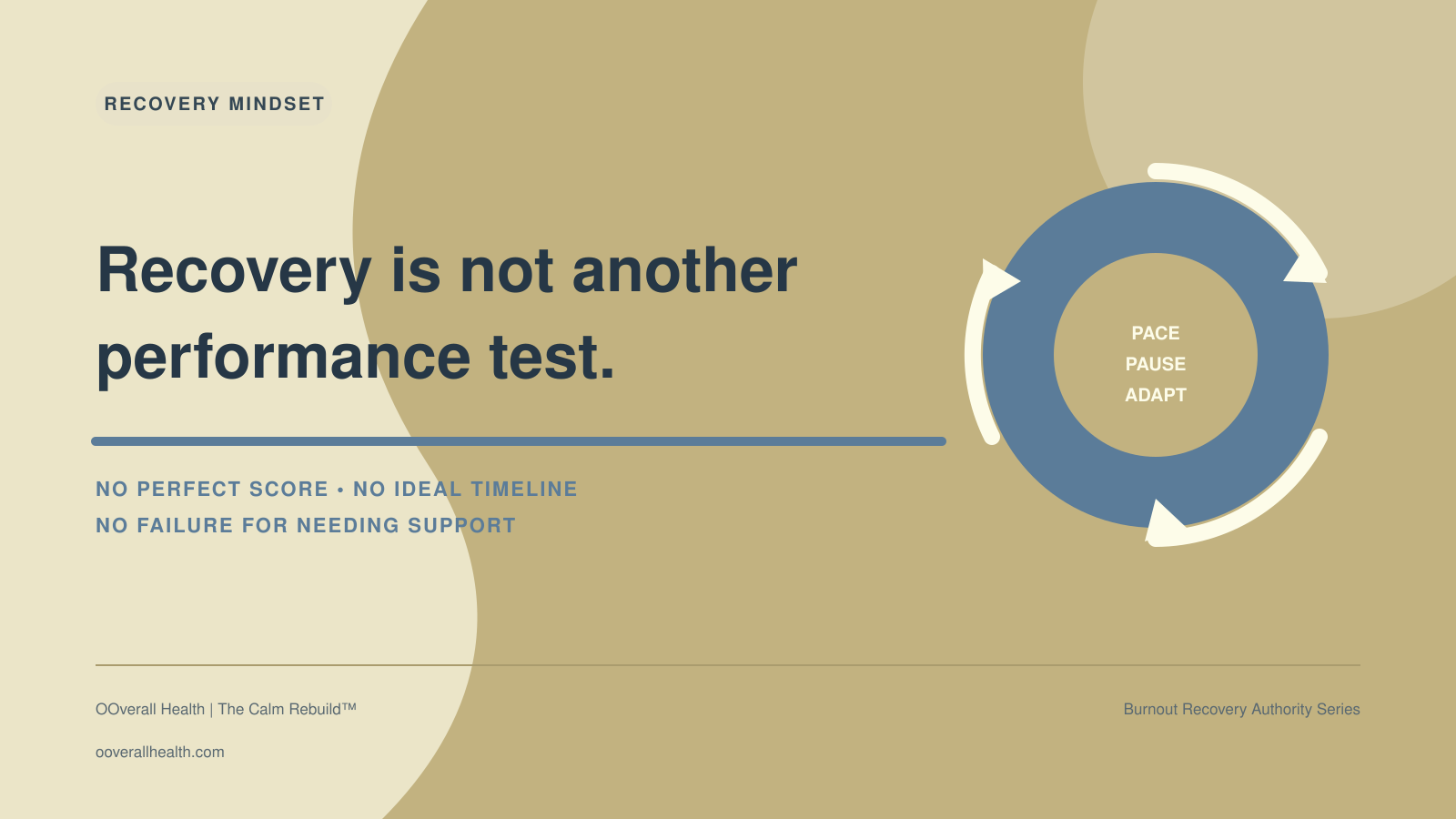
Reconnect with:
- people with whom you do not need to perform;
- activities that create curiosity or pleasure;
- spiritual or cultural practices;
- nature;
- humour;
- creativity;
- service that is freely chosen rather than extracted;
- a definition of success that includes health, presence, and sustainability.
Step 13: Plan a phased return or workload rebuild
Returning to the same volume under the same conditions can recreate the problem. Return-to-work evidence remains limited, but interventions generally focus on work modification, coordinated support, and gradual resumption.[17]
A phased plan may include:
- reduced hours;
- fewer high-complexity tasks;
- protected breaks;
- gradual exposure to emotionally demanding duties;
- weekly review of sleep, energy, symptoms, and function;
- clear escalation criteria;
- supervisor and healthcare coordination;
- a relapse-prevention plan.
| Build a structured recovery map: If you need more than isolated tips, The Calm Rebuild™ is OOverall Health’s 12-week High-Performance Anxiety & Burnout Recovery Program. It integrates capacity assessment, nervous-system regulation, sleep, boundaries, lifestyle practices, work-function recovery, and relapse prevention. Learn about The Calm Rebuild™. |
What the Research Says
Research-supported
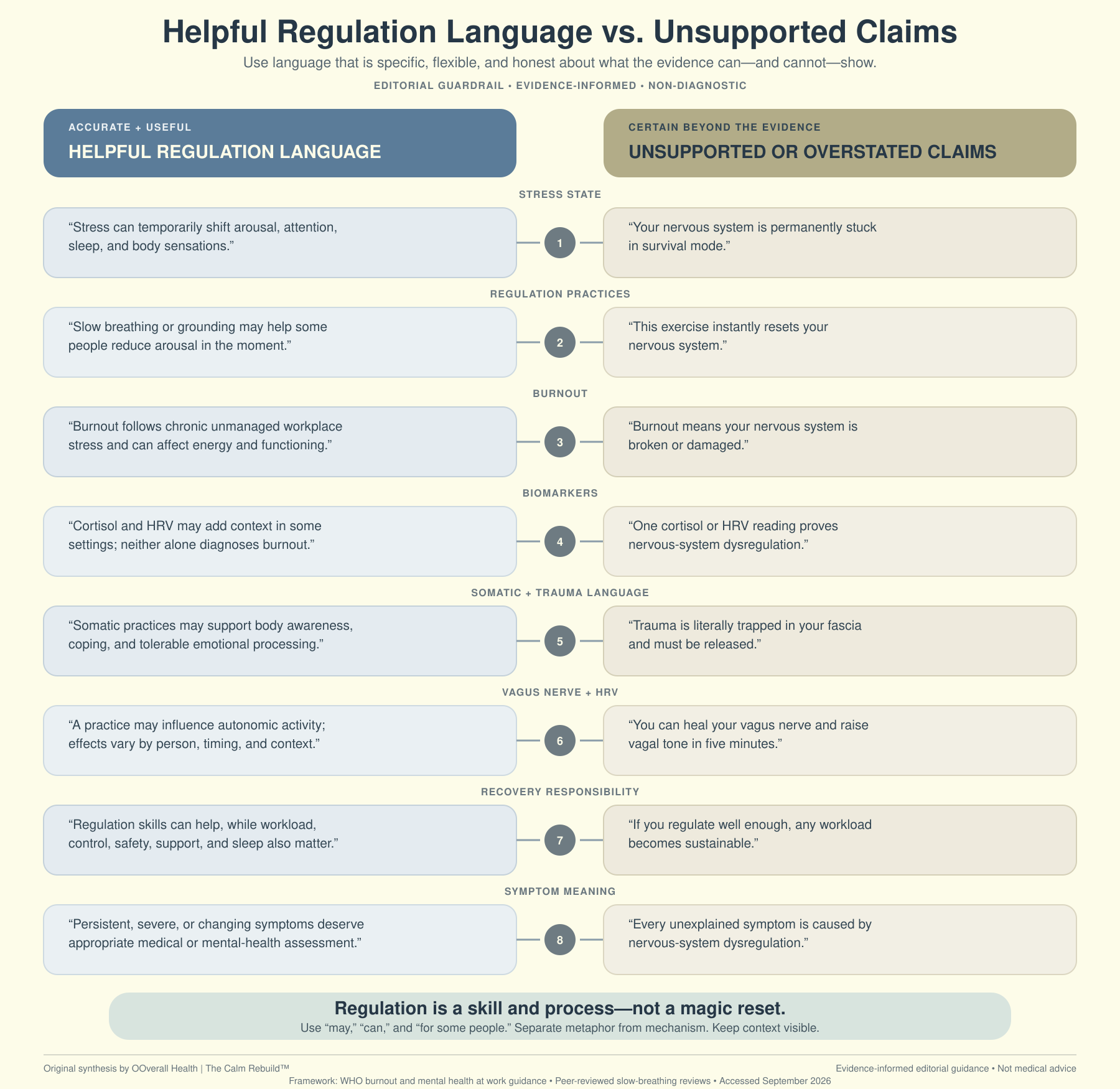
Burnout is an occupational phenomenon with three core dimensions. The WHO definition centres exhaustion, mental distance or cynicism, and reduced professional efficacy.[1]
Work conditions matter. Workload, low control, insufficient support, role conflict, unfairness, and poor resources are important contributors. Organizational interventions can reduce burnout, although effects are often modest and study methods vary.[18]
Burnout overlaps with depression, anxiety, insomnia, and cognitive difficulties. This overlap requires careful assessment rather than diagnosis from one symptom or online score.[2,5]
Sleep, movement, and psychological skills support recovery-related functions. Sleep supports mood and cognition; physical activity supports health and stress management; CBT-I is evidence-based for chronic insomnia; mindfulness-based programs can reduce stress and some burnout outcomes.[6,11,13,16]
Both individual and organizational changes are needed. Person-directed skills may help, but they should not replace workload, staffing, schedule, fairness, autonomy, and leadership changes.[18,19]
Emerging or mixed evidence
Burnout-specific nervous-system and cortisol patterns are inconsistent. Studies of autonomic and HPA-axis function do not establish one universal biological signature.[3]
Somatic practices may help, but direct burnout evidence is limited. Breathing, yoga, relaxation, and body-based awareness can influence stress-related outcomes. More burnout-specific trials are needed.
Nutrition may support mental and physical health, but no diet cures burnout. Evidence is stronger for overall diet quality and depression-related outcomes than for occupational burnout itself.[12]
Recovery timelines vary. Severity, duration, health conditions, workplace change, financial resources, support, sleep, and ability to reduce demands all influence recovery. No evidence supports a guaranteed 12-week cure.
Expert opinion and practice framework
The following are clinical and coaching principles rather than universally validated burnout treatments:
- measure capacity across physical, cognitive, emotional, relational, and work domains;
- stabilize before adding complex habits;
- pair regulation skills with demand reduction;
- treat boundaries as workload interventions;
- use progress markers other than productivity;
- rebuild gradually;
- plan relapse prevention from the beginning.
These principles should be presented transparently as an integrative practice framework.
A Practical 30-Day Burnout Recovery Action Plan
This plan is an educational starting point, not a substitute for individualized care. If you are severely impaired, medically unwell, unsafe, or unable to meet basic needs, seek professional support now rather than waiting 30 days.
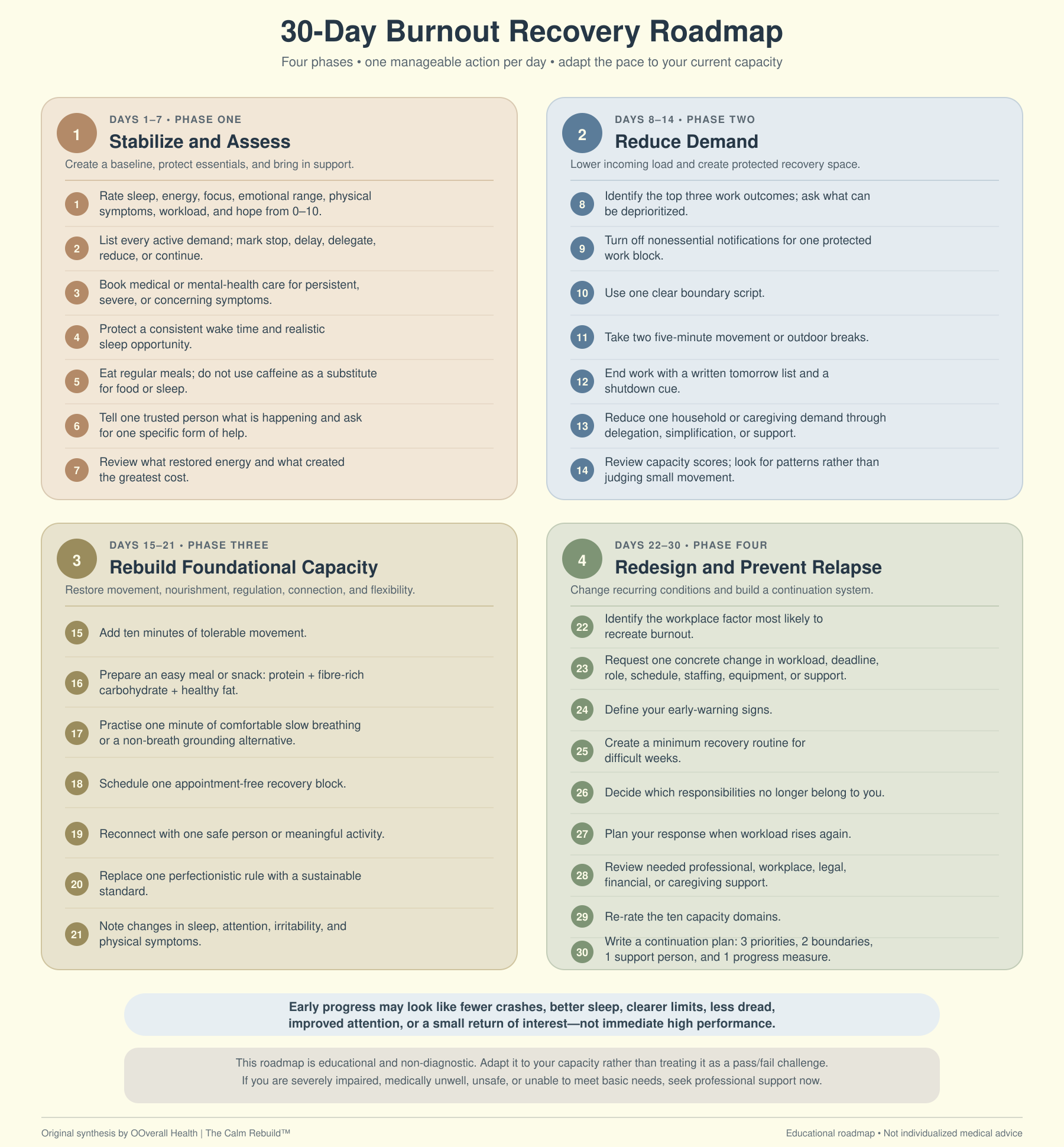
Days 1–7: Stabilize and assess
Day 1: Rate sleep, energy, focus, emotional range, physical symptoms, workload, and hope from 0 to 10.
Day 2: List every active demand. Mark each as stop, delay, delegate, reduce, or continue.
Day 3: Book medical or mental-health care for persistent, severe, or concerning symptoms.
Day 4: Protect a consistent wake time and realistic sleep opportunity.
Day 5: Eat three regular meals or a sustainable equivalent; reduce using caffeine as a substitute for food or sleep.
Day 6: Tell one trusted person what is happening and ask for one specific form of help.
Day 7: Review which activity restored energy and which activity created the greatest cost.
Days 8–14: Reduce demand
Day 8: Identify the top three work outcomes. Ask what can be deprioritized.
Day 9: Turn off nonessential notifications for one protected work block.
Day 10: Use one boundary script.
Day 11: Take two five-minute movement or outdoor breaks.
Day 12: End work with a written tomorrow list and a shutdown cue.
Day 13: Reduce one household or caregiving demand through delegation, simplification, or support.
Day 14: Review your capacity scores. Do not judge small movement; look for patterns.
Days 15–21: Rebuild foundational capacity
Day 15: Add ten minutes of tolerable movement.
Day 16: Prepare one easy meal or snack that combines protein, fibre-rich carbohydrate, and healthy fat.
Day 17: Practise one minute of comfortable slow breathing or a non-breath grounding alternative.
Day 18: Schedule one appointment-free recovery block.
Day 19: Reconnect with one safe person or meaningful activity.
Day 20: Identify one perfectionistic rule and replace it with a sustainable standard.
Day 21: Note changes in sleep, attention, irritability, and physical symptoms.
Days 22–30: Redesign and prevent relapse
Day 22: Identify the workplace factor most likely to recreate burnout.
Day 23: Request a concrete change: workload, deadline, role clarity, equipment, schedule, staffing, supervision, or accommodation.
Day 24: Define your early-warning signs.
Day 25: Create a minimum recovery routine for difficult weeks.
Day 26: Decide which responsibilities no longer belong to you.
Day 27: Plan how to respond when workload begins rising again.
Day 28: Review whether professional, workplace, legal, financial, or caregiving support is still needed.
Day 29: Re-rate the ten capacity domains.
Day 30: Write a 30-day continuation plan with three priorities, two boundaries, one support person, and one measure of progress.
Progress may first appear as fewer crashes, slightly better sleep, more honest limits, reduced dread, improved attention, or a small return of interest—not immediate high performance.
When Professional Help Is Needed
Seek prompt medical or mental-health care if you experience:
- thoughts of suicide, self-harm, or harming someone else;
- inability to care for yourself or dependents;
- severe hopelessness or loss of pleasure;
- panic, trauma symptoms, or escalating substance use;
- chest pain, fainting, severe shortness of breath, neurological symptoms, or other acute physical concerns;
- profound fatigue, unexplained weight change, persistent fever, bleeding, or worsening pain;
- loud snoring, gasping, severe daytime sleepiness, or suspected sleep apnea;
- insomnia that persists despite adequate opportunity for sleep;
- cognitive changes that affect safety, driving, medication, patient care, or financial decisions;
- symptoms that continue across all areas of life;
- workplace harassment, discrimination, unsafe conditions, or ethical concerns requiring formal support.
A healthcare professional can assess medical causes, sleep disorders, medications, depression, anxiety, trauma, ADHD, substance use, and other contributors. A therapist can help with emotional regulation, identity, boundaries, grief, perfectionism, trauma, and behaviour change. Occupational health, human resources, unions, disability professionals, or legal advisors may be necessary when workplace conditions are central.
Frequently Asked Questions About Burnout Recovery
1. What is the fastest way to recover from burnout?
There is no universally fastest method. The highest-value first steps are usually to reduce ongoing demand, protect sleep, assess medical and mental-health contributors, and secure practical support. Adding more wellness tasks without changing the conditions may increase pressure.
2. How long does burnout recovery take?
Recovery can take weeks, months, or longer. It depends on severity, duration, sleep, health, workplace change, financial and caregiving pressures, support, and whether the main stressors can be reduced. Exact online timelines should be treated cautiously.
3. Can burnout go away on its own?
Mild symptoms may improve when a temporary demand ends and recovery is adequate. Persistent burnout often requires intentional changes to workload, boundaries, sleep, health care, coping, and support.
4. Is burnout a mental illness?
The WHO classifies burnout as an occupational phenomenon, not a medical condition. Burnout can coexist with depression, anxiety, insomnia, trauma, and other conditions that require clinical assessment.
5. Is burnout the same as depression?
No, but they overlap. Burnout is tied conceptually to work; depression can affect mood, pleasure, thinking, sleep, and function across life. A professional assessment is important when symptoms are pervasive or severe.
6. What are the main signs of burnout?
The core dimensions are exhaustion, increased mental distance or cynicism toward work, and reduced professional efficacy. Sleep disruption, irritability, brain fog, physical tension, withdrawal, and coping changes may also occur.
7. Can I be burned out and still productive?
Yes. Some people maintain visible performance by working longer, sacrificing recovery, withdrawing from other areas, or relying on urgency. This is often described as high-functioning burnout, though it is not a formal diagnosis.
8. Why does rest not fix my burnout?
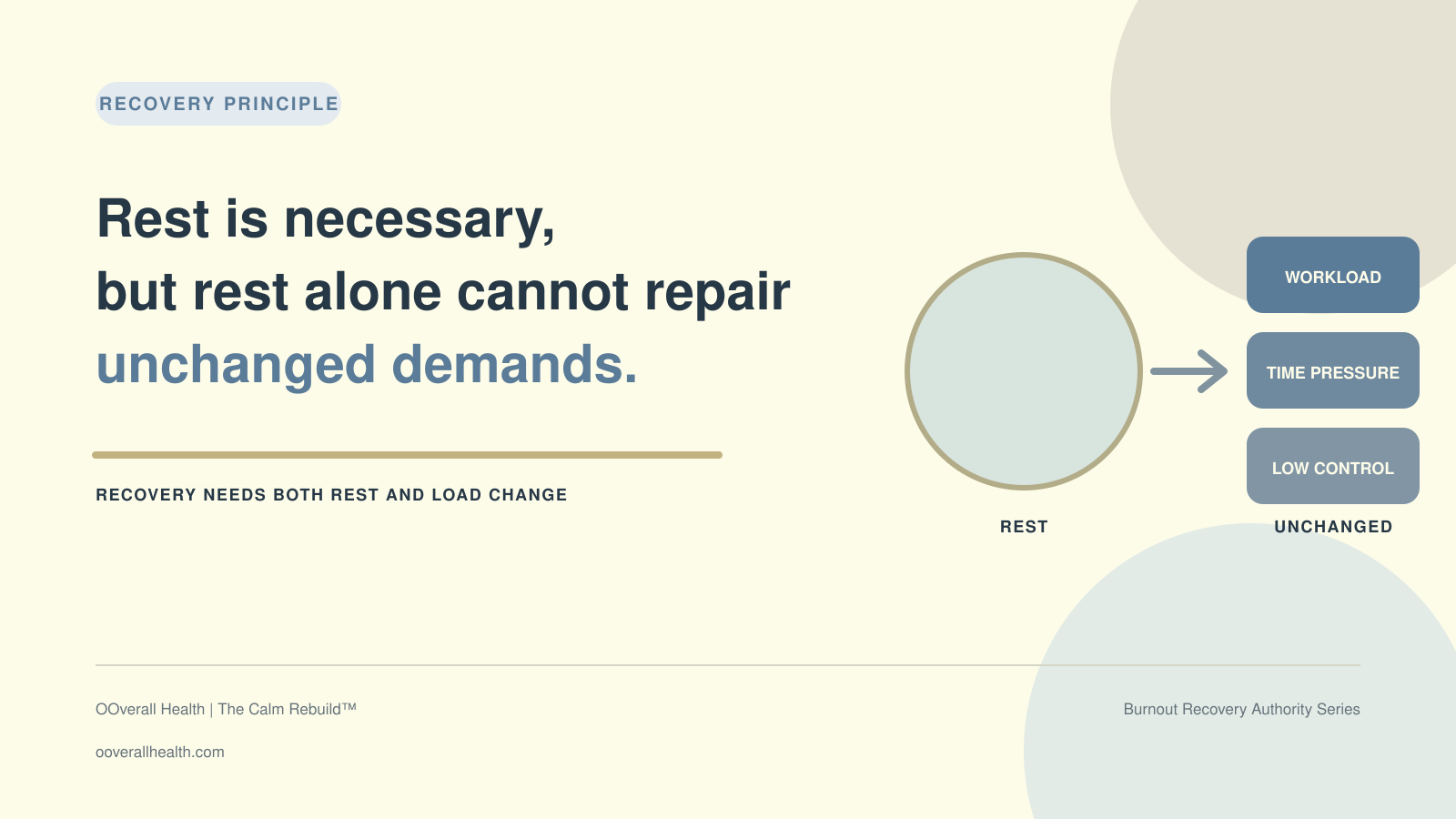
Rest may relieve immediate fatigue, but the problem returns when workload, low control, values conflict, insufficient support, insomnia, or over-responsibility remain. Recovery requires both restoration and redesign. See Why Rest Is Not Fixing Your Burnout.
9. Do I have to quit my job?
Not always. Some people recover through accommodations, workload reduction, better boundaries, role change, leave, schedule redesign, or support. Others decide that the environment cannot be made safe or sustainable. The decision should consider health, finances, responsibilities, values, and realistic alternatives. Please see How to Recover From Burnout Without Quitting Your Career
10. Can a vacation cure burnout?
A vacation can create recovery space and reveal how depleted you are, but it cannot permanently correct conditions that remain unchanged. Use time away for restoration and planning, not only escape.
11. What should I do if I cannot take time off?
Reduce demand in smaller units: clarify priorities, stop nonessential work, use protected focus blocks, shorten meetings, delegate, request accommodations, protect sleep, and build brief recovery periods into the day.
12. Does burnout damage the brain?
Burnout is associated with cognitive complaints and differences in cognitive performance. Current evidence does not justify telling every burned-out person that their brain is permanently damaged or “offline.”
13. Is burnout caused by high cortisol?
Not in a simple or universal way. Burnout-specific HPA-axis and autonomic findings are inconsistent. A single cortisol result cannot diagnose burnout.
14. Can nervous-system regulation help burnout?
Regulation practices such as paced breathing, grounding, mindfulness, movement, and relaxation may support stress management. They work best alongside sleep restoration, workload change, healthcare, boundaries, and organizational support.
15. What foods help burnout recovery?
No food cures burnout. Regular, balanced meals with adequate protein, fibre-rich carbohydrates, vegetables, fruit, legumes, whole grains, nuts, seeds, healthy fats, and hydration can support general health and stable energy.
16. Should I take supplements for burnout?
Supplements should target a documented need or clear clinical indication. “Adrenal support” stacks and large combinations can be expensive, interact with medications, or delay proper assessment.
17. Is exercise good for burnout?
Usually, appropriately dosed movement can support sleep, mood, and health. More is not always better. Begin with tolerable activity and reduce the dose if it causes prolonged exhaustion or worsening symptoms.
18. How do I sleep when burnout makes my mind race?
Use a consistent wake time, reduce late caffeine and alcohol, create a written tomorrow list, establish a lower-stimulation transition, and seek CBT-I or medical assessment when insomnia persists.
19. Can parents and caregivers have burnout?
Parents and caregivers can experience profound emotional, cognitive, and physical exhaustion. The WHO occupational definition applies to work, so caregiving-related exhaustion should be named accurately while still taken seriously. Respite and practical support are often essential.
20. What is a good burnout self-assessment?
Use a validated instrument under its terms and combine it with functional questions about sleep, cognition, physical symptoms, workload, relationships, and safety. Do not treat an online quiz as a diagnosis.
21. Can burnout come back?
Yes. Relapse is more likely when workload rises, sleep erodes, boundaries disappear, support falls, or old over-responsibility patterns return. A relapse-prevention plan should identify early signs and pre-agreed actions.
22. What kind of professional helps with burnout?
Depending on your needs, support may include a family physician, psychologist, therapist, psychiatrist, sleep specialist, occupational-health clinician, registered dietitian, physiotherapist, social worker, or workplace/disability professional.
23. Can burnout cause physical symptoms?
Burnout and chronic stress can be associated with headaches, tension, sleep problems, digestive symptoms, fatigue, and pain. These symptoms may also have medical causes and should be assessed when persistent or concerning.
24. How do I help someone who is burned out?
Listen without minimizing, offer specific practical help, reduce demands where you can, encourage medical or mental-health support, and avoid turning recovery into another list of obligations.
Conclusion: Recovery Is Capacity Rebuilt, Not Productivity Restored at Any Cost
Burnout recovery is not about returning you to the same conditions with better breathing skills.
It is about restoring enough physical, cognitive, emotional, and relational capacity to live and work without repeatedly borrowing from your future health. It involves sleep, food, movement, regulation, boundaries, support, medical care when needed, and honest changes to the demands placed on you.
You do not need to wait for collapse before taking your symptoms seriously. You also do not need to accept frightening claims that your nervous system is broken or that one supplement, test, or routine will cure you.
Begin with the next useful decision:
- What needs medical assessment?
- What demand can be reduced?
- What support can be requested?
- What foundation needs protection?
- What boundary will prevent the same pattern from returning?
Recovery becomes more durable when it is not another private project carried by the exhausted person alone.
| Choose structured support when self-guided recovery is not enough: The Calm Rebuild™ is a 12-week program for professionals rebuilding capacity after high-functioning anxiety and burnout. It combines assessment, nervous-system skills, sleep and lifestyle foundations, boundaries, work-function recovery, and relapse prevention. Explore The Calm Rebuild™. |
| Capacity Audit: If you are unsure whether the program fits your situation, book a focused free 15-minute Capacity Audit to review your current function, main barriers, and safest next step. |
Suggestions of More Articles to Read
- “burnout versus ordinary stress” → Burnout vs. Stress: What High Performers Get Wrong
- “signs of high-functioning burnout” → The Signs of High-Functioning Burnout
- “why rest may not resolve burnout” → Why Rest Is Not Fixing Your Burnout
- “tired-but-wired sleep pattern” → Why You Feel Tired but Wired All the Time
- “how chronic stress reduces capacity” → How Chronic Stress Shrinks Your Capacity
- “recover from burnout without quitting your career” → How to Recover From Burnout Without Quitting Your Career
- “stages of burnout in high achievers” → The Stages of Burnout in High Achievers
- “nervous-system dysregulation can feel like” → What Nervous System Dysregulation Feels Like
Featured Snippet Opportunities
- What is burnout? Burnout is an occupational phenomenon that develops when chronic workplace stress has not been successfully managed. It is marked by exhaustion, growing mental distance or cynicism toward work, and reduced professional efficacy. Burnout is not classified as a medical condition, and its symptoms can overlap with depression, anxiety, sleep disorders, and physical illness.
- What are the three dimensions of burnout?The three dimensions of burnout are:
- Exhaustion: Feeling physically, mentally, or emotionally depleted by work.
- Mental distance or cynicism: Becoming detached, negative, numb, or resentful toward the job.
- Reduced professional efficacy: Feeling less capable, productive, effective, or accomplished at work.
- How do you recover from burnout?Burnout recovery usually requires reducing the demands causing depletion while rebuilding physical and psychological capacity:
- Stabilize immediate health and functioning.
- Reduce unnecessary or harmful demands.
- Restore consistent sleep.
- Support energy with regular nutrition and hydration.
- Add tolerable movement without pushing through exhaustion.
- Practise breathing, grounding, mindfulness, or somatic regulation.
- Rebuild boundaries, workplace resources, and supportive relationships.
- Burnout vs. stress:
Stress Burnout Core pattern: Pressure and heightened activation. Core pattern: Exhaustion, detachment or cynicism, and reduced efficacy. Cause: May arise from short or long term demands in any area of life. Cause: Develops from chronic workplace stress that has not been successfully managed. Typical experience: “There is too much to manage.” Typical experience: “I have nothing left for this work.” Energy: Often tense, restless, worried, or tired but driven. Energy: Increasingly depleted, detached, and effortful. After recovery: Often improves when the immediate pressure passes. After recovery: May improve temporarily but return when working conditions remain unchanged. - Signs of burnout:Signs of burnout may appear in four domains:
- Emotional: Dread, irritability, cynicism, detachment, emotional numbness, or reduced accomplishment.
- Cognitive: Poor concentration, forgetfulness, indecision, rumination, mental fog, or reduced creativity.
- Physical: Persistent exhaustion, disrupted sleep, headaches, muscle tension, pain, or digestive changes.
- Behavioural: Withdrawal, avoidance, skipped breaks, increased mistakes, procrastination, or working longer while accomplishing less.
These signs are not diagnostic and can overlap with depression, anxiety, sleep disorders, medication effects, and physical illness.
- How long does burnout recovery take? Burnout recovery has no universal timeline; it may take weeks, months, or longer. Duration depends on severity and duration, whether workload and control change, sleep and physical health, access to support, financial pressures, coexisting depression or anxiety, and whether the person can recover without repeatedly returning to the same harmful demands.
- Can you recover without quitting your job? Yes, some people can recover from burnout without quitting when the conditions driving it can change. Recovery is more likely when workload, control, schedule, role clarity, support, and recovery time improve. Personal regulation skills can help, but alone they cannot make an unsafe, abusive, or chronically excessive work environment sustainable.Helpful workplace accommodations and workload changes may include:
- Temporarily reducing workload, caseload, or responsibilities
- Establishing clearer priorities and a stop-doing list
- Delegating tasks or redesigning the role
- Adjusting deadlines, shifts, meetings, or working hours
- Protecting uninterrupted focus and recovery periods
- Limiting after-hours communication and availability
- Improving staffing, supervisory support, and decision-making control
- Using medical leave, a phased return, or a temporary schedule reduction
- Moving to a safer team, manager, department, or role when necessary
Disclaimer
This content is intended for educational and informational purposes only and should not be considered medical advice. Readers should consult a qualified healthcare professional regarding personal health concerns.
References
- World Health Organization. Burn-out an “occupational phenomenon”: International Classification of Diseases. 2019. https://www.who.int/news/item/28-05-2019-burn-out-an-occupational-phenomenon-international-classification-of-diseases
- InformedHealth.org / NCBI Bookshelf. Depression: Learn More—What is burnout? Updated 2024. https://www.ncbi.nlm.nih.gov/books/NBK279286/
- Dahlman AS, et al. The hypothalamo-pituitary-adrenal axis and the autonomic nervous system in burnout. Biological Psychology. 2021. PMID: 34266613. https://pubmed.ncbi.nlm.nih.gov/34266613/
- McEwen BS. Neurobiological and systemic effects of chronic stress. Chronic Stress. 2017. PMID: 28856337. https://pubmed.ncbi.nlm.nih.gov/28856337/
- Koutsimani P, et al. Burnout and cognitive performance. International Journal of Environmental Research and Public Health. 2021. PMID: 33671754. https://pubmed.ncbi.nlm.nih.gov/33671754/
- Centers for Disease Control and Prevention. About Sleep. Updated 2024. https://www.cdc.gov/sleep/about/index.html
- Stansfeld S, Candy B. Psychosocial work environment and mental health—a meta-analytic review. Scandinavian Journal of Work, Environment & Health. 2006. PMID: 17173201. https://pubmed.ncbi.nlm.nih.gov/17173201/
- Dall’Ora C, et al. Characteristics of shift work and their impact on employee performance and wellbeing: A literature review. International Journal of Nursing Studies. 2016. PMID: 27045561. https://pubmed.ncbi.nlm.nih.gov/27045561/
- Mind Garden. Maslach Burnout Inventory: Licensing and administration. https://www.mindgarden.com/117-maslach-burnout-inventory-mbi
- Burnout Assessment Tool. Official instrument and use information. https://burnoutassessmenttool.be/start_eng/
- Edinger JD, et al. Behavioral and psychological treatments for chronic insomnia disorder in adults: An American Academy of Sleep Medicine clinical practice guideline. Journal of Clinical Sleep Medicine. 2021. PMCID: PMC7853203. https://pmc.ncbi.nlm.nih.gov/articles/PMC7853203/
- Lassale C, et al. Healthy dietary indices and risk of depressive outcomes: A systematic review and meta-analysis of observational studies. Molecular Psychiatry. 2019. PMID: 30254236. https://pubmed.ncbi.nlm.nih.gov/30254236/
- Centers for Disease Control and Prevention. Physical Activity Basics and Your Health. Updated 2025. https://www.cdc.gov/physical-activity-basics/about/index.html
- Ochentel O, et al. Efficacy of exercise therapy in persons with burnout: A systematic review and meta-analysis. Journal of Sports Science & Medicine. 2018. PMID: 30116121. https://pubmed.ncbi.nlm.nih.gov/30116121/
- Laborde S, et al. Effects of voluntary slow breathing on heart rate and heart rate variability: A systematic review and meta-analysis. Neuroscience & Biobehavioral Reviews. 2022. PMID: 35623448. https://pubmed.ncbi.nlm.nih.gov/35623448/
- Fendel JC, et al. Mindfulness-based interventions to reduce burnout and stress in physicians: A systematic review and meta-analysis. Academic Medicine. 2021. PMID: 33496433. https://pubmed.ncbi.nlm.nih.gov/33496433/
- Lambreghts C, et al. Return-to-work interventions for sick-listed employees with burnout: A systematic review. 2023. PMID: 37500536. https://pubmed.ncbi.nlm.nih.gov/37500536/
- Cohen C, et al. Workplace interventions to improve well-being and reduce burnout for nurses, physicians and allied healthcare professionals: A systematic review. BMJ Open. 2023. PMID: 37385740. https://pubmed.ncbi.nlm.nih.gov/37385740/
- Kiratipaisarl W, et al. Individual and organizational interventions for managing burnout. 2024. PMID: 39478552. https://pubmed.ncbi.nlm.nih.gov/39478552/
- Mayo Clinic. Job burnout: How to spot it and take action. Updated 2023. https://www.mayoclinic.org/healthy-lifestyle/adult-health/in-depth/burnout/art-20046642
- Cleveland Clinic. What Is Burnout? Signs and How to Recover. Updated 2026. https://health.clevelandclinic.org/signs-of-burnout
- Cleveland Clinic. 12 Ways to Recover From Burnout. 2023. https://health.clevelandclinic.org/how-to-recover-from-burnout
- Johns Hopkins Medicine. Mindfulness Meditation. https://www.hopkinsmedicine.org/health/wellness-and-prevention/mindfulness-meditation
- Harvard Health Publishing. How to reduce stress and anxiety through movement and mindfulness. 2025. https://www.health.harvard.edu/mental-health/how-to-reduce-stress-and-anxiety-through-movement-and-mindfulness
- Centers for Disease Control and Prevention. Managing Stress. Updated 2026. https://www.cdc.gov/mental-health/living-with/index.html
- Ramachandran HJ, et al. Mindfulness-based interventions to reduce psychological distress and burnout in nurses: A systematic review and meta-analysis. 2023. PMID: 35187740. https://pubmed.ncbi.nlm.nih.gov/35187740/
- Li LZ, et al. Nurse burnout and patient safety, satisfaction, and quality of care: A systematic review and meta-analysis. 2024. PMID: 39499515. https://pubmed.ncbi.nlm.nih.gov/39499515/
- Walker J, et al. Cognitive Behavioral Therapy for Insomnia: A Primer. 2022. PMCID: PMC10002474. https://pmc.ncbi.nlm.nih.gov/articles/PMC10002474/
- Harvard Health Publishing. Identifying and relieving stress. Updated 2024. https://www.health.harvard.edu/topics/stress
- Johns Hopkins Medicine. Sleepless Nights? Try Stress Relief Techniques. Updated 2026. https://www.hopkinsmedicine.org/health/wellness-and-prevention/sleepless-nights-try-stress-relief-techniques